
SEO INFORMATION
Meta Title: Plantation Wood for Plywood: Southeast Asia Species Guide
Meta Description: Which plantation wood should your plywood line run? Rubberwood, eucalyptus, acacia, Sengon, Meranti and Keruing compared for Indonesia, Vietnam and Thailand.
URL Slug: plantation-wood-for-plywood-southeast-asia
Primary keyword: plantation wood for plywood
Secondary keywords: rubberwood plywood, eucalyptus veneer, Sengon wood, plywood raw material selection
Twenty years ago, plywood mills in Southeast Asia could still count on natural tropical hardwood. Today the industry runs on plantation timber: rubberwood and acacia in Thailand, eucalyptus in Vietnam, Sengon and Meranti in Indonesia, and a widening mix across Malaysia. Choosing the right plantation wood for plywood is no longer a purchasing detail — it decides your veneer thickness tolerance, your drying settings, your glue consumption and, ultimately, which markets will accept your panels.
This guide compares the species that actually move through Southeast Asian mills, explains what each one demands from your peeling and drying line, and gives you a practical way to judge log quality before the wood reaches your knife.
Why Southeast Asia Runs on Plantation Wood
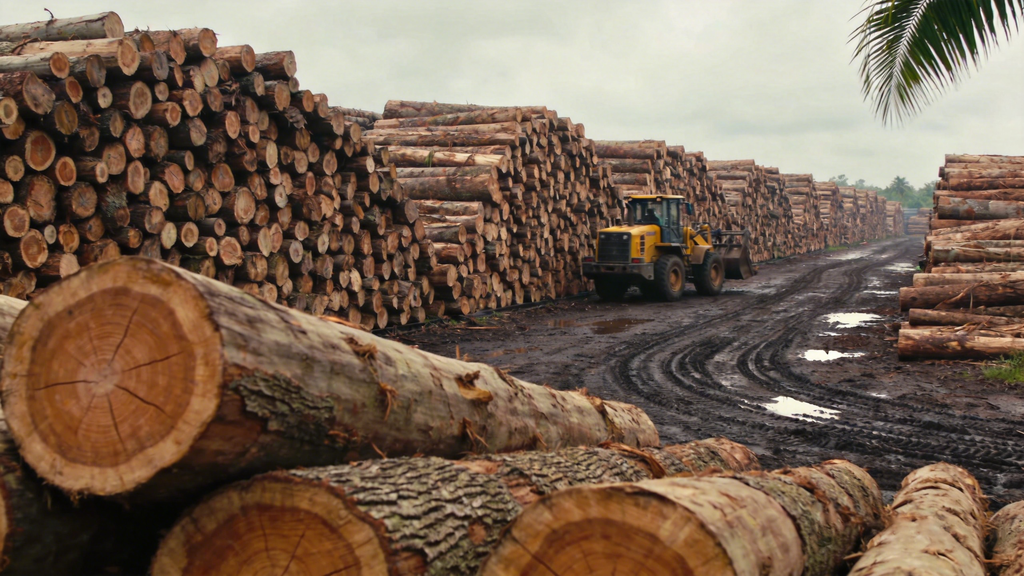
Three forces pushed the region’s plywood industry toward plantation species.
Resource pressure. Logging of natural tropical hardwoods such as Meranti and Keruing is restricted by environmental laws, forest protection policies and FSC certification requirements. Supply is less stable and prices for premium timber keep rising.
Deliberate policy. Governments across the region actively promote plantation forestry. Indonesia encourages fast-growing species harvested in 5–10 years, and reports a fast-growing forest stock suitable for plywood of around 60 million m³. Thailand’s forest coverage is approximately 31%, and government policy has pushed plantation forestry to meet wood processing demand. Vietnam’s eucalyptus plantation area is reported at roughly 300,000 hectares with annual output of 6–9 million m³.
Economics. Plantation wood grows fast, costs less and processes predictably. Vietnam produces an estimated 2–3 million m³ of plywood a year, concentrated in clusters around Hanoi, Bac Giang and Thanh Hoa in the north and Binh Duong, Dong Nai and Ho Chi Minh City in the south. Indonesia’s annual plywood production is around 800,000–1,000,000 m³.
The trade-off is that plantation wood for plywood in this region is lighter, faster-grown and less uniform than natural hardwood. It rewards mills that control the process and punishes mills that treat all logs the same.
The Species That Matter in Southeast Asia
| Species | Main producing countries | Character at the knife | Typical end use |
|---|---|---|---|
| Eucalyptus | Vietnam, Thailand, Indonesia | Medium to high density; consistent fibers; peels evenly when logs are round and fresh | Core veneer, structural plywood, formwork, furniture substrate |
| Rubberwood | Thailand, Vietnam, Malaysia | Dense hardwood; higher cutting resistance; good machinability | Furniture panels, interior plywood, engineered wood |
| Acacia | Thailand, Vietnam | Fast-growing plantation species; density to be confirmed by origin | Plywood, particleboard, engineered wood panels |
| Albasia / Sengon | Indonesia | Low density, loose fibers; cuts easily but fuzzes and tears if run too slowly | Lightweight plywood, packaging, pallets, formwork, subfloors |
| Meranti / Melapi / Malacca | Indonesia, Malaysia | Relatively soft; requires high cutting speed to avoid fiber tearing | Face veneer, interior and decorative plywood |
| Keruing | Indonesia, Malaysia | Dense, high-strength hardwood; hard on knives | Container flooring, heavy-duty structural panels |
| Pine | Thailand, Vietnam, Indonesia | Softwood with high resin content; keep moisture low to avoid bubbling | Construction plywood, packaging |
| Poplar | Regional plantations and imports | Low density, straight grain, easy to peel; widely used in China’s core veneer industry | Core veneer, furniture substrate, packaging |
Density references from our hot press specifications: eucalyptus 500–700 kg/m³, rubberwood 550–650 kg/m³, pine 450–550 kg/m³ and poplar 400–500 kg/m³. Density for acacia, Albasia, Meranti and Keruing varies too widely by origin and age to quote responsibly — those values must be confirmed against your actual supply.
Species by Species: What Each Wood Demands
Eucalyptus
Eucalyptus is the backbone of Vietnam’s plywood industry. It grows quickly — harvestable in about 5–7 years — and its fiber structure is consistent and uniform, which produces veneer with even thickness and a surface that accepts glue well. Plywood made from eucalyptus has moderate density, good strength and stable dimensions.
What it demands: eucalyptus is dense enough to punish a light machine. Plan for a heavy-duty frame, adequate motor power and a rigid knife carriage. Because it is a hardwood, thickness tolerance should be held at ±0.05 mm where the product requires it.
Rubberwood
Rubberwood is a genuine hardwood, not a softwood substitute, and it behaves like one — higher cutting resistance, more knife wear and a stronger requirement for stable peeling geometry. Thailand’s plantation sector produces rubberwood, acacia and eucalyptus as its main commercial species, and rubberwood plywood is widely used in furniture and interior applications.
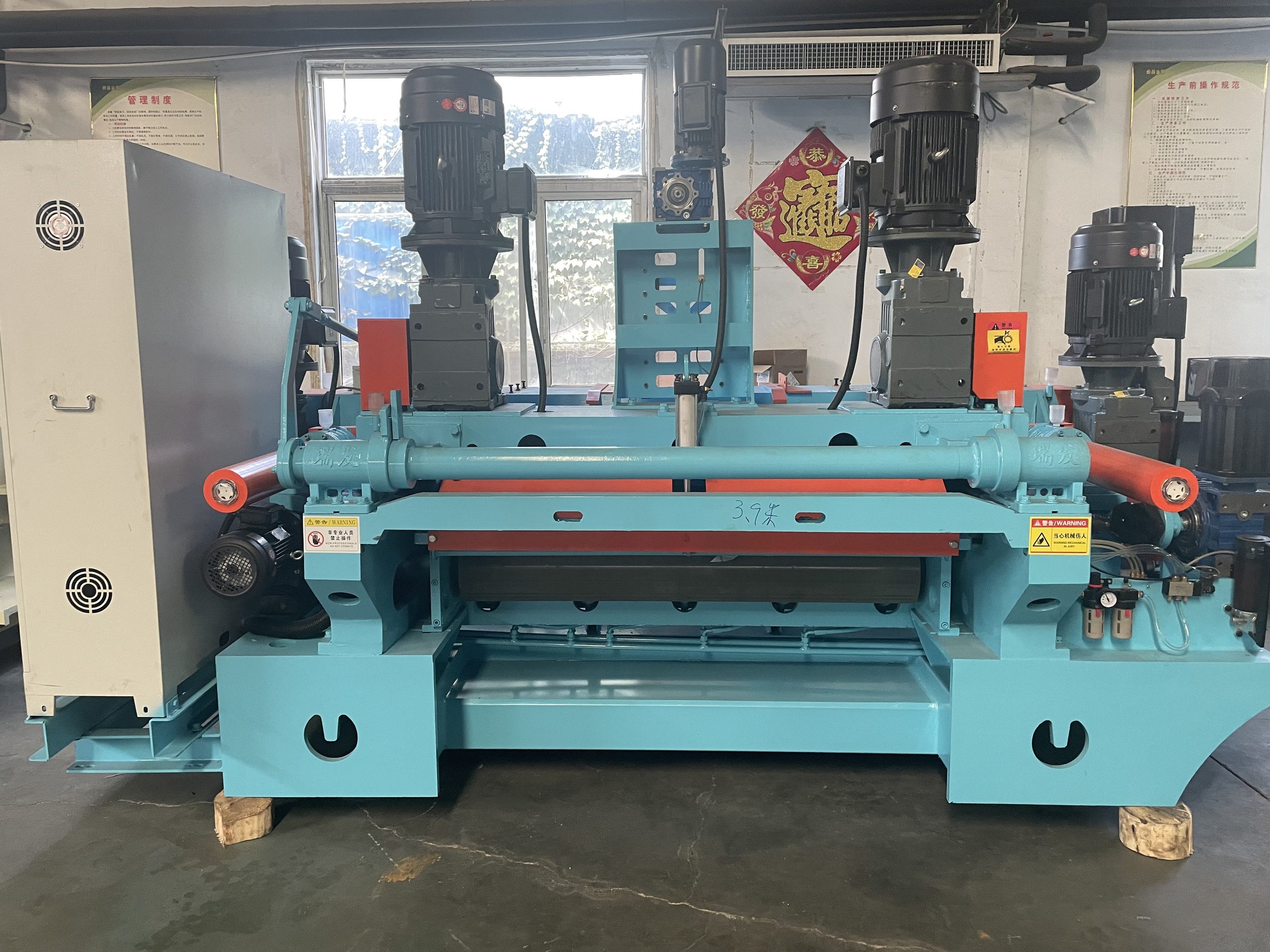
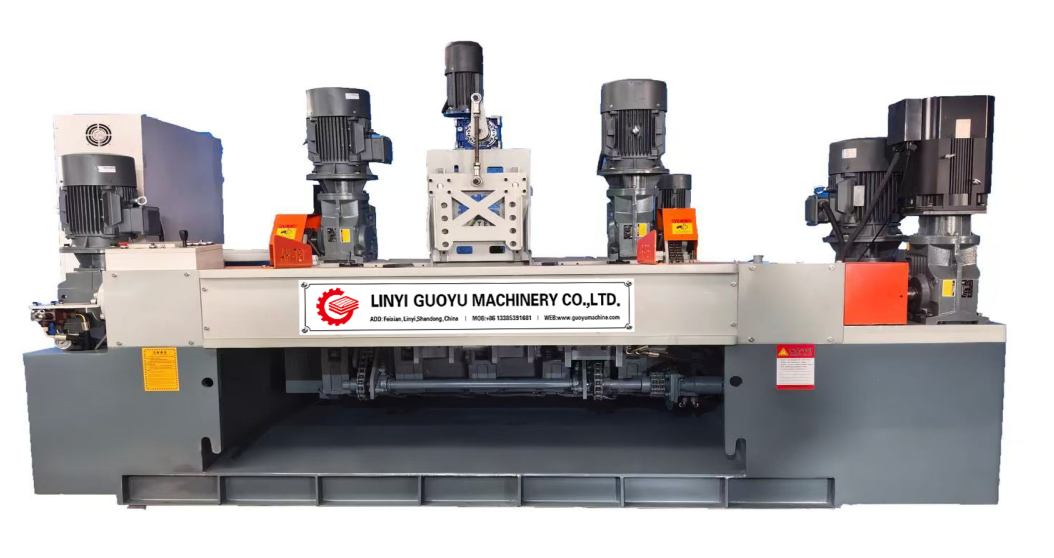
What it demands: a heavy-duty peeling configuration. Rubberwood is one of the species explicitly listed for our heavy-duty hardwood peeling model, alongside eucalyptus and birch. On the pressing side, rubberwood is typically pressed at 115–135 °C and 1.0–1.5 MPa.
Acacia
Acacia is one of the fastest-growing commercial plantation species in Thailand and Vietnam and is widely used for plywood, particleboard and other engineered wood panels. It is attractive when eucalyptus or rubberwood supply tightens.
What it demands: because acacia density and fiber behavior vary significantly by origin and rotation age, treat it as a species that needs its own peeling trial rather than a copy of your eucalyptus settings. Confirm density, optimal knife angle and speed on real logs before committing a production schedule to it.
Albasia / Sengon
Albasia — known as Sengon in Indonesia — is the region’s lightest plantation wood. It is used for formwork, walls, roofs, subfloors, packaging and pallets, and its low weight makes it suitable for weight-sensitive products such as recreational vehicles and shipping applications.
What it demands: not power, but control. Albasia fibers are loosely packed, so the wood compresses and tears instead of cutting cleanly when speed or roller pressure is wrong. Our softwood peeling model is specified for 0.5–4.0 mm thickness, ±0.1 mm tolerance and a peeling speed of 100 m/min, with logs from 50–500 mm. The recommended operating window for softwood is 60–100 m/min — running slower increases surface fuzzing rather than improving quality.
Because Sengon panels are lighter and generally weaker than Meranti or Keruing boards, they suit applications where weight matters more than load-bearing strength. Grading the product honestly is part of selling it well.
Meranti / Melapi / Malacca
Meranti is one of Indonesia’s premium plywood species and remains in demand for face veneer and interior panels. It is relatively soft compared with Keruing, and that softness has a specific production consequence: high-speed cutting is recommended, because low speed tends to cause severe tearing of the surface fibers.
What it demands: speed discipline and sharp knives. Meranti is also the species most exposed to supply pressure — logging restrictions and certification requirements have made high-quality Meranti both more expensive and less predictable in supply.
Keruing
Keruing is dense, strong and hard-wearing, which is why it dominates container flooring and heavy-duty structural panels. Its dense fibers give strong bonding between layers and excellent compressive and wear resistance.
What it demands: the most robust configuration on your equipment list. Dense fibers put heavy load on the knife carriage, so cast or heavy-gauge knife carriage structures, hydraulic knife clamping and high-precision spindle lathes are the right tools. On the press side, container flooring production typically runs a 25-layer, 1500-ton class hot press.
Pine and poplar
Both are worth mentioning because they set expectations for what “easy” plantation wood looks like. Poplar is low density with straight, uniform grain and peels into thin even sheets; it matures in 8–12 years and is a mainstay of core veneer production. Pine is a softwood with high resin content, and its moisture must be kept toward the lower end of the range to avoid bubbling during pressing.
How to Judge Log Quality Before It Reaches the Peeler
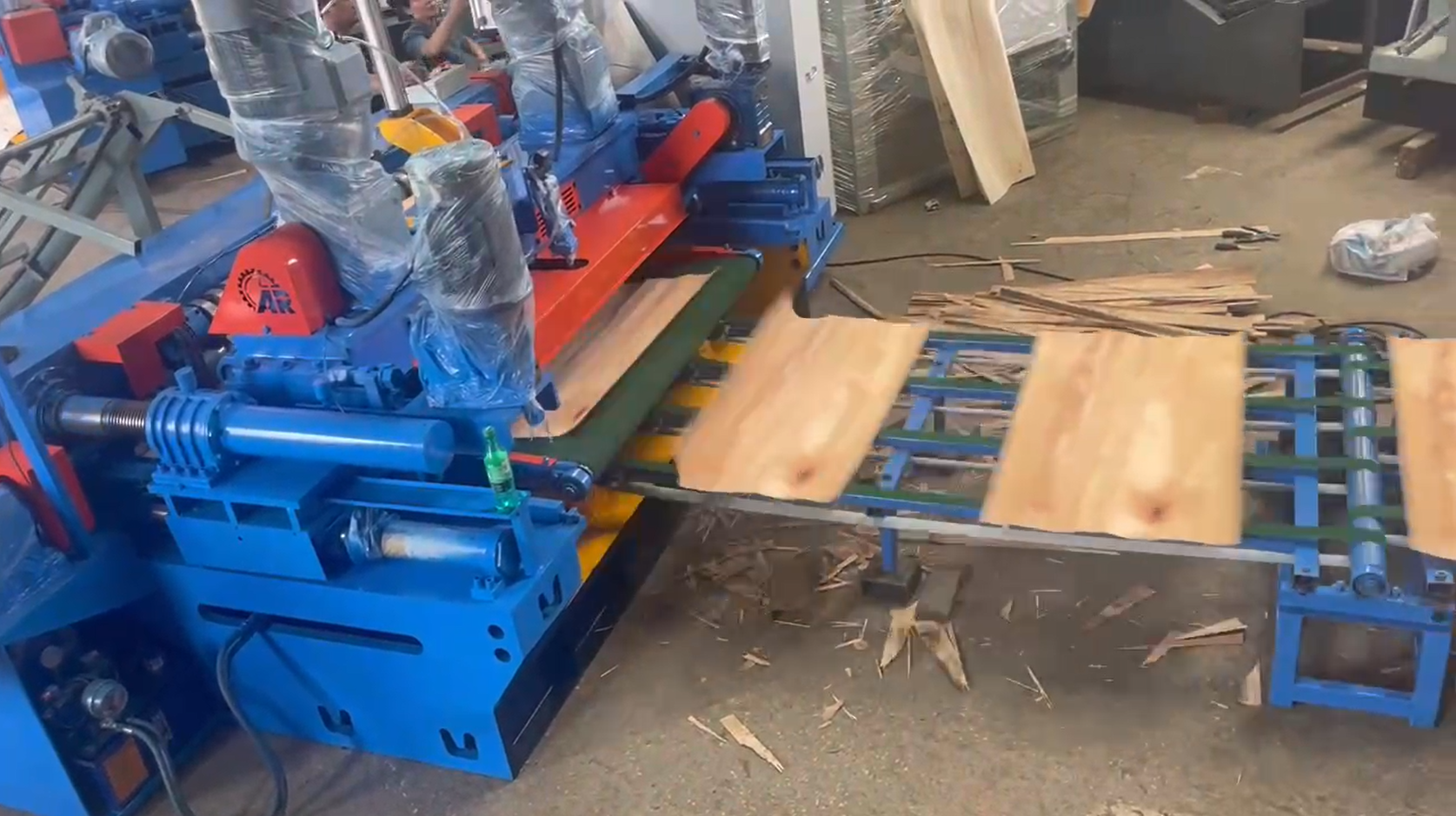
Veneer quality starts in the log yard. Bad logs cannot be rescued downstream, no matter how precise the machine.
What good logs look like:
- Proper diameter for your machine’s range and your product
- Uniform texture with straight grain
- No knots, wormholes or decay
- Reasonably round cross-section with limited taper
- Consistent moisture across the batch
What to reject or downgrade:
- Bent or twisted logs, and logs with off-center heartwood — these cause warping and uneven veneer
- Heavy knot concentration, which produces tear-out at the knots and downgrades the sheet
- Logs with large density differences between heartwood and sapwood, which make cutting resistance unpredictable
- Mixed fresh-cut and semi-dry logs delivered without separation
A practical intake checklist:
| Check | Why it matters |
|---|---|
| Diameter range and distribution | Determines machine opening size, core loss and how much of the log becomes saleable veneer |
| Roundness and taper | Bent or off-center logs cause uneven peeling and warping |
| Knots, cracks, wormholes, decay | Direct drivers of veneer grade and rejection rate |
| Moisture content and consistency | Uneven moisture in the batch causes uneven peeling and drying |
| Fresh-cut versus semi-dry | Both can be peeled, but they must be handled as separate batches, not mixed |
| Bark and sand content | Wears knives and distorts the log profile if not debarked first |
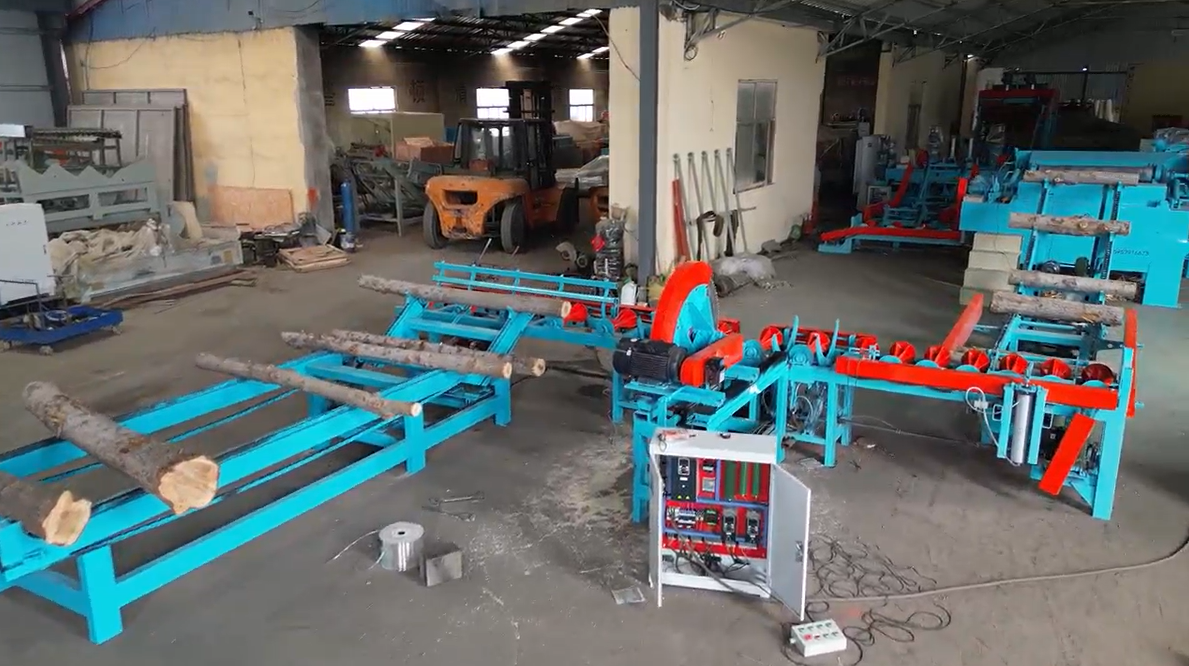
Two process notes that follow from this. First, debarking and rounding before peeling is not optional on plantation logs — it protects the knife and evens out the log profile. Second, freshly peeled veneer must be laid flat and conditioned properly; veneer left in a heap warps before it ever reaches the dryer.
Mixing Species on One Line
Most Southeast Asian mills cannot choose a single species. When supply shifts, the line has to run whatever is available that week. That is workable, but only if you accept one rule: there is no universal machine setting.
Knife angle, pitch gap, knife height, knife gap, roller pressure and peeling speed all need to be re-established when the species changes. Practical adjustments include:
- Knife material and angle. Hardwoods need knives with toughness; softwoods need high hardness and wear resistance. The common knife angle range is 18°–22° — a larger angle lasts longer but produces a rougher surface, a smaller angle cuts cleaner but chips more easily.
- Speed. Soft softwoods such as Albasia and Malacca need high cutting speed to avoid fiber tearing; dense hardwoods such as eucalyptus and rubberwood need speed matched to cutting resistance, typically lower than softwood speeds.
- Roller pressure. Loosely packed softwood fibers compress under excessive pressure, which changes thickness and surface quality.
- Knife gap. Setting the gap as a ratio of target veneer thickness keeps cutting stable across a thickness change.
Document the settings for each species you run, and re-verify thickness and surface quality after every changeover. The settings that work in one factory for one species rarely transfer unchanged to another.
Sustainable Sourcing and Export Documentation
Plantation supply is not the same as compliant supply, and buyers in Europe, the United States, Japan and Korea increasingly ask for proof.
Two developments matter to any mill planning exports:
- Certification requirements are tightening around tropical hardwoods. Meranti and Keruing logging is already restricted by environmental law and FSC requirements, which is part of why their prices have risen.
- The EU Deforestation Regulation requires evidence that imported wood products are not linked to deforestation. Smaller suppliers often struggle with the documentation, while larger, better-organized exporters turn compliance into a competitive advantage. Malaysia in particular has built a stronger certification track record in the region.
For your own operation, this means keeping harvest origin, supplier documentation, species declaration and chain-of-custody records organized from the start. The specific certification and documentation your target market requires is to be confirmed with your buyer and your local authority.
Frequently Asked Questions
Which plantation wood is best for plywood core veneer?
It depends on the strength you need. Eucalyptus is the region’s workhorse core species because it peels efficiently and produces stable, moderately strong panels. Poplar is even easier to peel but lighter. Sengon is the lightest option and suits weight-sensitive products. Core veneer makes up roughly 50–70% of total plywood thickness, so core species selection directly drives your cost base.
Is Sengon (Albasia) good enough for export plywood?
It can be, for the right application. Sengon is light and low density, and it is used in formwork, packaging, pallets and weight-sensitive products such as recreational vehicles. It is not a substitute for Meranti or Keruing in load-bearing or high-durability applications. Grade the product to the application rather than to the species name.
Can I run rubberwood and eucalyptus on the same peeling line?
Yes. Both are dense hardwoods and both are listed for our heavy-duty hardwood peeling model, which covers 0.8–4.0 mm thickness, 30–120 m/min, a maximum log diameter of 550 mm and a minimum core of 24 mm. Settings such as knife angle, roller pressure and speed still need to be re-established between the two species.
Why have Meranti and Keruing become more expensive?
Because supply is constrained. Logging of these tropical hardwoods is limited by environmental laws, forest protection policies and FSC certification requirements, which has pushed up prices for high-quality timber and made supply less stable. Many mills have responded by shifting part of their production to fast-growing species such as Sengon and acacia.
How do I check log quality before buying?
Check diameter range and distribution, roundness and taper, knots, cracks, wormholes and decay, moisture consistency across the batch, bark and sand content, and whether the logs are fresh-cut or semi-dry. Bent logs and logs with off-center heartwood cause warping; heavy knots cause tear-out. Verify quality at intake, not after the veneer is peeled.
Next Step: Match the Species to the Machine
There is no single best plantation wood for plywood — there is only the species your line is configured to handle at a profit. Tell us your main species, log diameter range, target veneer thickness and daily output, and our engineers will recommend the peeling and drying configuration that fits, with the knife and speed settings to match, usually within 48 hours.