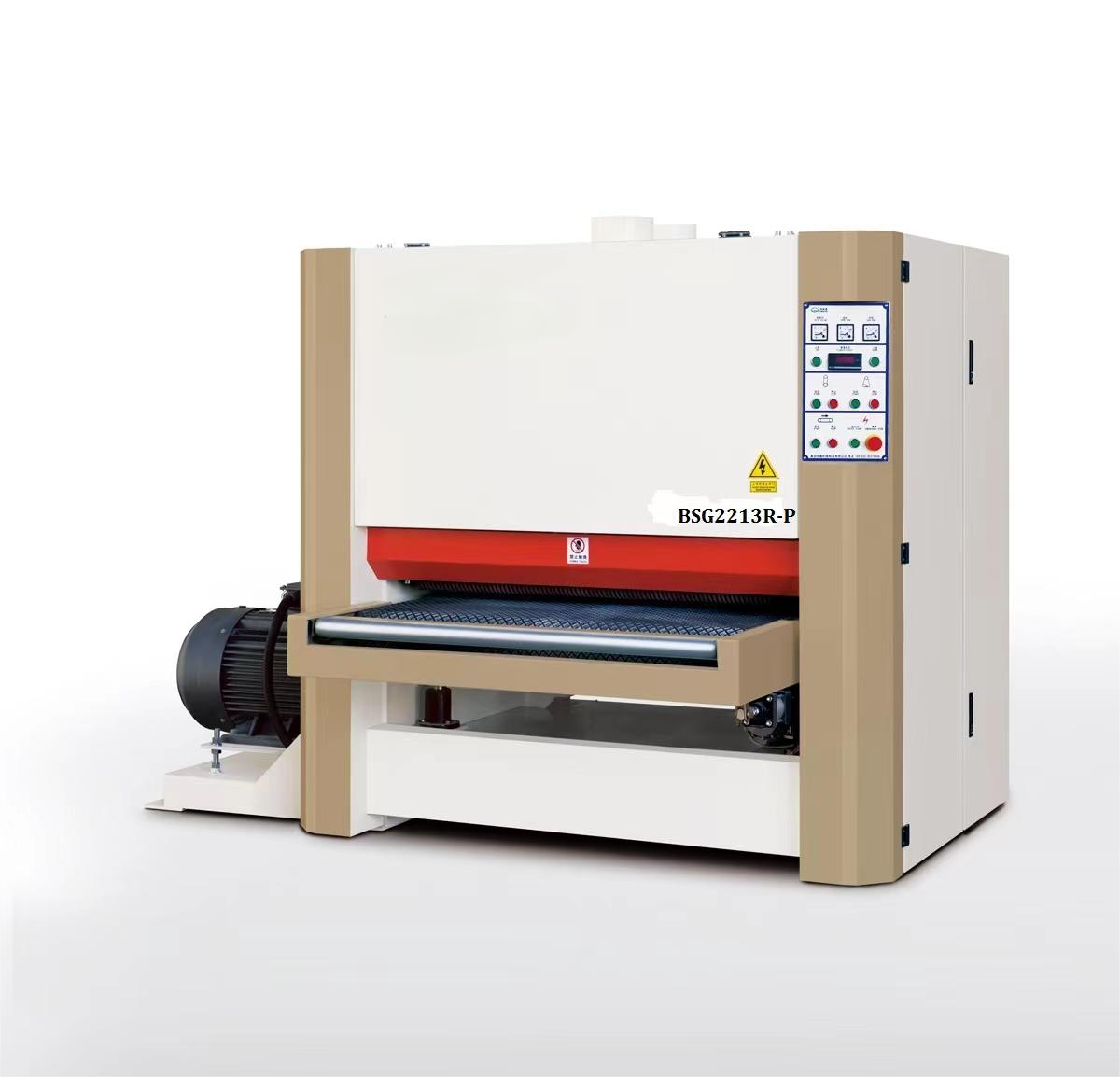
Легкая шлифовальная машина для полировки поверхности фанеры
Technical Parameters
Size of sanding belt: 1330 × 2200 mm
Speed of feeding: 6–30 m/min
Total motor power: 41.37 kW
Working air pressure: 0.55 MPa
Consumption of compressed air: 0.15 m³/min
Air-speed of dust suction: 25–30 m/s
Dimension of the machine: 2500 × 1970 × 1950 mm
What’s the Polishing Effect?
Smooth surface:Removes small burrs, glue marks, and dents, ensuring a clean finish. After polishing, the surface feels smooth to the touch and looks more uniform, making it suitable for export or high-end furniture panels.
Fine and delicate:Provides a refined surface without rough sanding marks, ideal for subsequent processes such as painting, veneering, or lamination.
No damage to the decorative layer:With minimal material removal, it avoids sanding through the veneer or damaging the grain layer, preserving the decorative effect.
What Plywood Boards Are Suitable for Light Model Plywood Sander?
1. Plywood: Mainly for thin plywood, furniture boards, and decorative plywood surface sanding to remove the burrs and improves surface flatness
2. MDF / Blockboard :Light sanding to remove roughness, dents, or uneven areas and suitable for secondary processing of furniture and decorative plywood boards
3. Particle Board / OSB :Initial surface sanding to improve coating or lamination effect
4. Other Thin Wood-based Panels: Surface preparation for door panels, cabinet panels, laminated boards, decorative boards, etc.
Why is the light-duty sanding machine suitable for polishing plywood face and back?
Surface finishing – The plywood base is already calibrated before laminating veneers. After veneering, only light polishing is needed to remove small burrs and unevenness, ensuring a smoother surface for painting, lamination, or embossing.
Better decorative effect – Veneered plywood panels require the uniform, attractive finish. With moderate pressure and sanding force, light-duty machines provide fine sanding that improves flatness and enhances overall aesthetics.
Lower material loss – Since veneer is thin and costly, heavy-duty sanding can cause damage and waste. Light-duty sanding protects the surface while achieving the desired finish.
Why is the light-duty sanding machine suitable for polishing MDF?
Polishing rather than thickness calibration
MDF is already uniform in thickness. The main purpose of sanding is to remove burrs, dents, and fine fibers, improving flatness and smoothness rather than heavy material removal. the light-duty sander is well-suited for this finishing process.
Prevents burning or fuzzing
MDF contains a high amount of resin. If the sanding force is too strong or the sanding speed is too high, the surface may burn or become fuzzy. Light-duty sanding provides gentle abrasion, preserving a fine surface.
Better for subsequent processes
With minimal material removal, a light-duty sander leaves the MDF surface smooth and delicate, making it ideal for further processing such as veneering, painting, or lamination.
Furniture manufacturers – Pre-veneer and pre-paint sanding for a delicate finish without damaging the surface.
Decorative panel producers – Veneer panels, UV boards, flooring substrates requiring uniform polishing before coating or lamination.
SMEs for secondary processing – Small/medium factories benefit from low investment, easy operation, and suitability for fine finishing.
Export-oriented & high-end users – Demanding high flatness and smoothness to enhance product quality and reduce rework
Is the Light-Duty Sanding Machine Durable?
Durability mainly depends on design, configuration, and maintenance. In general, light-duty sanding machines are quite durable for the following reasons:
Simpler structure
Designed for surface polishing with low sanding depth and light load, meaning less stress on the drive system and rollers compared with heavy-duty machines.
Less wear on parts
With lower sanding intensity, key components such as rollers, sanding belts, and bearings experience less stress, extending service life.
Low maintenance requirements
Routine care involves dust cleaning, belt and roller inspection, and occasional lubrication, resulting in fewer failures.
Reliable for continuous operation
With quality sanding belts and proper lubrication, the machine runs stably and supports continuous production in small to medium factories.
Service life depends on configuration
10+ years with proper maintenance.
Здравствуйте, я Луна, руководитель отдела продаж компании Guoyu. Моя команда и я будем рады узнать больше о ваших конкретных требованиях и оказать поддержку в производстве фанеры.
Карсон
Пол
Линси
Получите больше преимуществ после отправки информационной формы
*Мы уважаем вашу конфиденциальность, и вся информация защищена.
Получите больше преимуществ после отправки информационной формы
Я Лео, руководитель отдела продаж в E-abel. Я и моя команда будем рады познакомиться с вами и узнать все о вашем бизнесе, требованиях и ожиданиях.
Карсон
Пол
Линси
*Мы уважаем вашу конфиденциальность, и вся информация защищена.
+86 13385391861
lunamachines@outlook.com
Свяжитесь с нами
Получите больше преимуществ после отправки информационной формы
*Мы уважаем вашу конфиденциальность, и вся информация защищена.
Свяжитесь с нами прямо сейчас, получите ответ сегодня.
Здравствуйте, я Луна, руководитель отдела продаж компании Guoyu. Моя команда и я будем рады узнать больше о ваших конкретных требованиях и оказать поддержку в производстве фанеры.