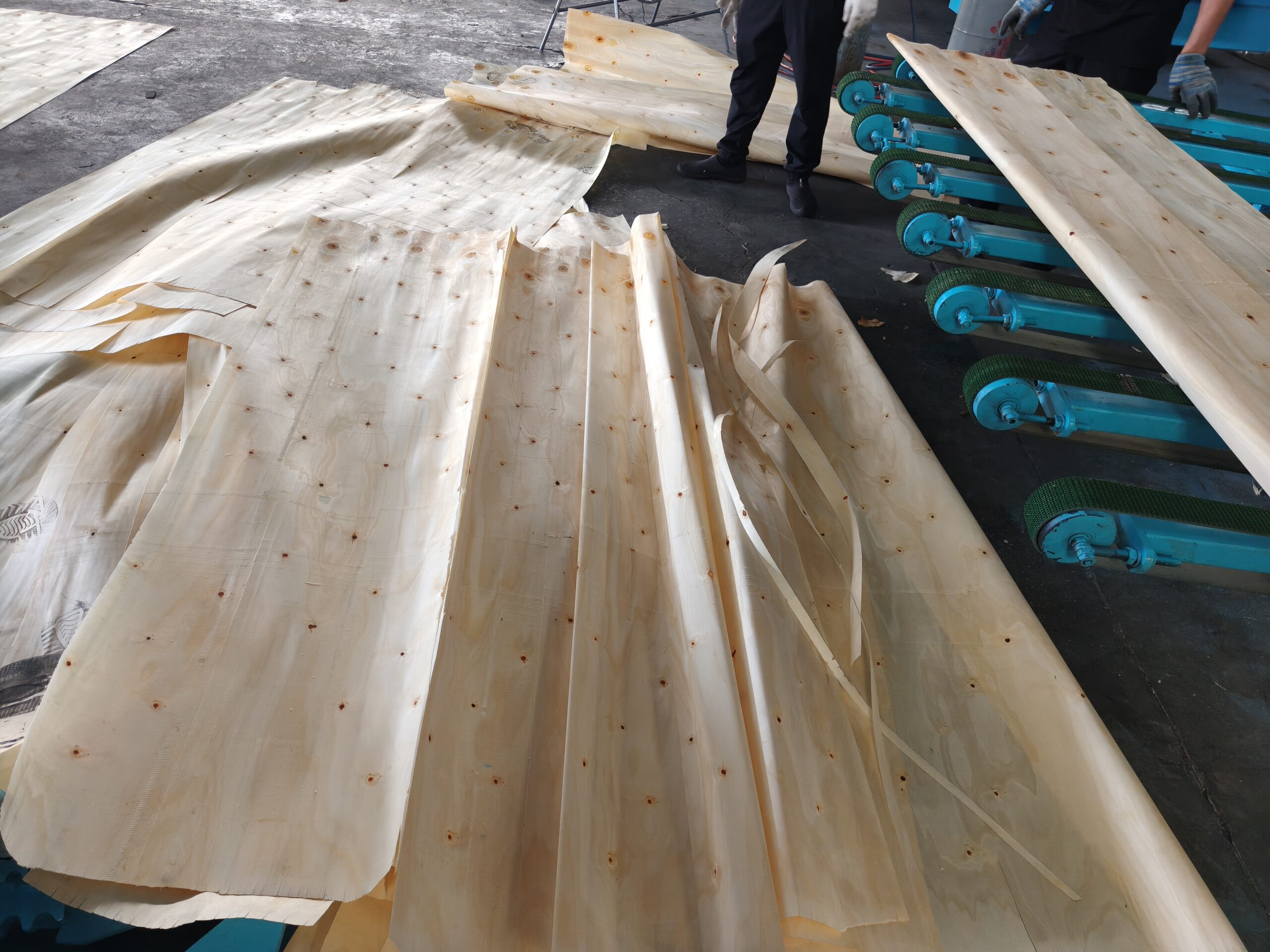

Brazil is not a single-species plywood market. A mill may peel plantation eucalyptus for core veneer in the morning and high-value tropical hardwood for face veneer in the afternoon, with pine, cedar or teak entering the schedule when an order requires it. A veneer peeling machine Brazil’s plywood mills can run profitably therefore has to cover a wider species range than the typical Southeast Asian plantation line — and it has to do so while the industry faces rising export pressure and a push toward automation.
This guide covers Brazil’s raw material base, the specifications that matter for its species mix, the knife settings that change between hardwood and softwood, and the site conditions — including voltage — that should be settled before the machine is shipped.
Brazil’s Eucalyptus Base and Why It Matters
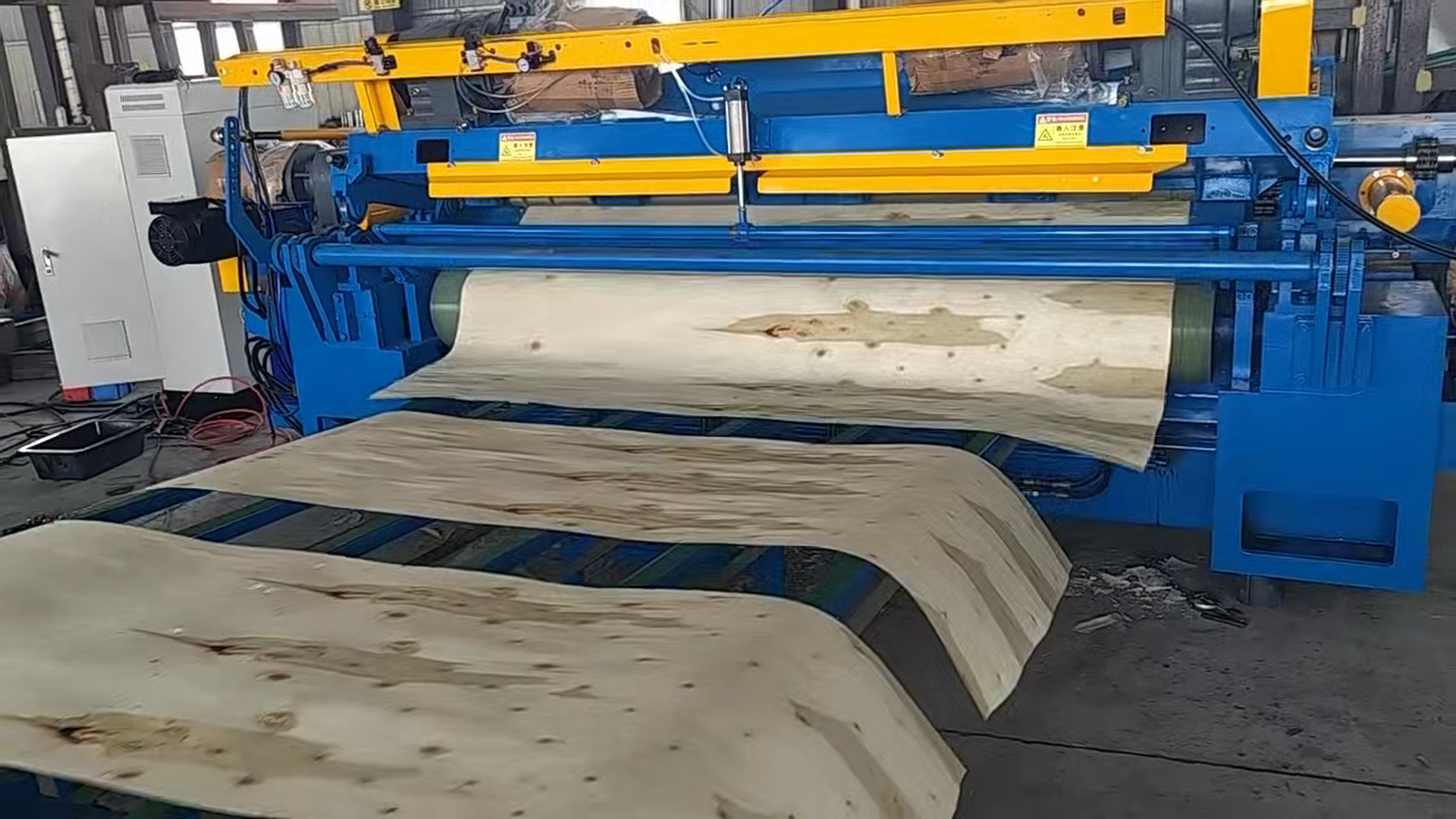
Eucalyptus is the backbone of Brazil’s plywood core supply. Planted eucalyptus covers roughly 7.6 million hectares, about 76% of the country’s planted forests, with a growth cycle of 5–7 years. It is strong, works well in bending and compression, and serves both structural panels and furniture-grade products.
That resource base has two consequences for equipment selection.
First, log supply is dominated by a fast-grown species with consistent fiber but variable diameter. A peeler that only performs well on one log size will create bottlenecks as the plantation harvest moves between age classes.
Second, eucalyptus is not the whole market. Brazil also processes tropical hardwoods and softwoods for domestic and export products, including teak, oak, cherry, walnut, pine and cedar. The machine has to be configured for that range, not just for the dominant species.
Species Map: What Brazil Actually Peels
| Wood group | Species | Behavior at the knife | Typical use |
|---|---|---|---|
| Plantation hardwood | Eukalyptus | Medium to high density, consistent fiber, good strength; peels cleanly when logs are round and fresh | Core veneer, structural plywood, furniture substrate |
| Dense tropical hardwood | Teak, oak, cherry, walnut | High cutting resistance and tight fibers; vibration shows up as thickness deviation and knife marks | Face veneer, decorative and high-value panels |
| Weichholz | Pine, cedar | Lower density, easier to cut, but prone to surface marking and warping if pressure is wrong | Construction plywood, packaging, general panels |
The practical implication is that a Brazilian mill needs a machine with enough structural rigidity for dense hardwood and enough control resolution for softwood. A frame that is strong enough for oak will also handle eucalyptus; a machine tuned only for light softwood will struggle the moment a teak or oak order arrives.
What a Veneer Peeling Machine Brazil’s Mills Should Handle
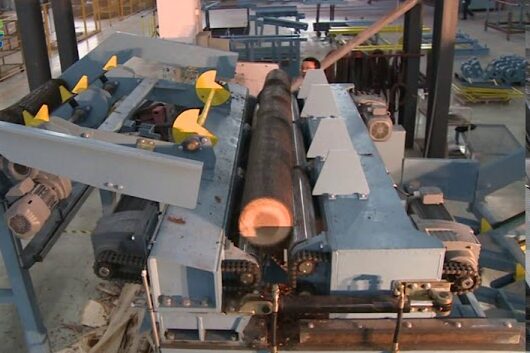
Our Brazil-configured wood peeling machine is built around the following specification:
| Parameter | Specification |
|---|---|
| Peeling thickness | 0,5–4,0 mm |
| Peeling speed | 40–80 m/min |
| Maximum peeling diameter | 500 mm |
| Minimum peeling diameter | 32 mm |
| Roller length | 1500 mm |
| Single roller | Ø125 mm, 1500 mm long, R87 hardened gear, 7.5 kW × 2 |
| Double roller | Ø125 mm, 1500 mm long, R87 hardened gear, 7.5 kW × 2 |
| Screw | Ø90 mm, R87 hardened gear, 11 kW servo |
| Rubber roller | Ø150 mm, 1500 mm long, RV90, 2.2 kW |
| Clipping knife | 1500 × 90 × 12 mm, RV90, 2.2 kW servo |
| Peeling knife | 1500 × 180 × 16 mm, high-speed steel |
| Core removing | Pneumatisch |
| Veneer pressure | Pneumatisch |
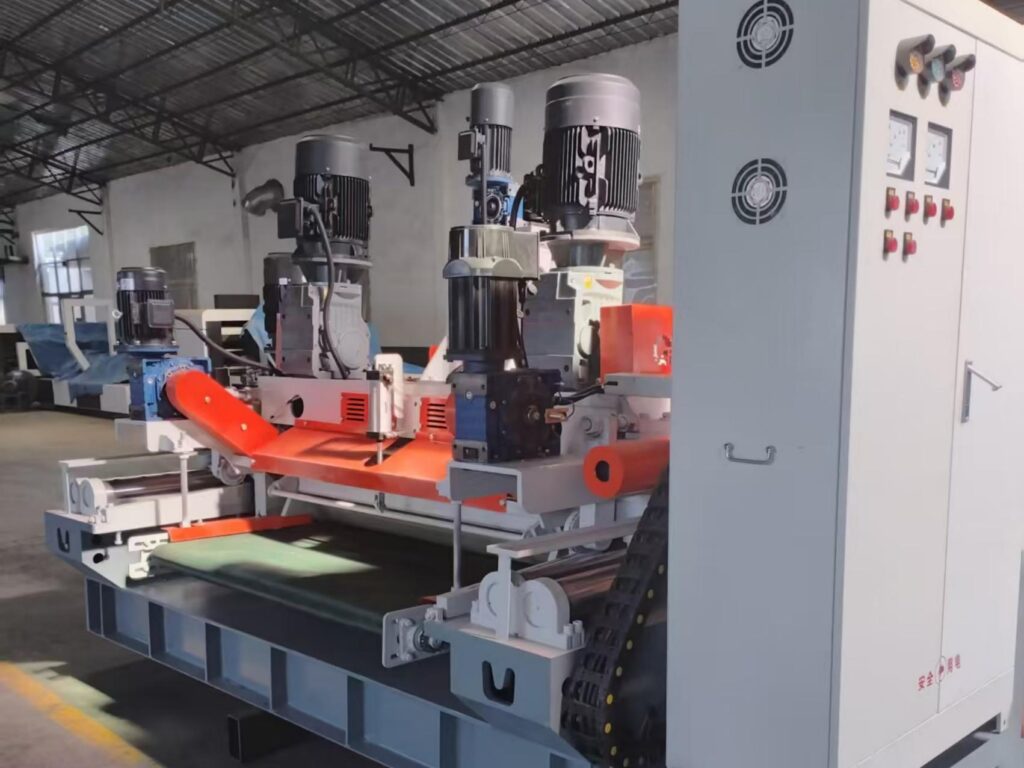
The design details matter as much as the table. The frame, single-roller base, double-roller base and knife carriage are fully reinforced; major components are machined twice on a CNC gantry center; rollers are ground twice for roundness; the feed screw is heat treated; and each side of the knife carriage runs on three guide rails. Those choices exist to keep vibration low when the machine moves from eucalyptus to dense tropical hardwood.
The 1500 mm roller length matches a 4 ft peeling line. Mills producing longer panels should confirm the matching knife and roller length before ordering rather than assuming the same configuration scales.
Hardwood vs Softwood: What Changes at the Knife
The machine can physically peel both groups, but the settings should not be copied from one to the other.
| Setting | Dense hardwood | Weichholz |
|---|---|---|
| Material des Messers | Toughness is the priority | Hardness and wear resistance are the priority |
| Messerwinkel | Toward the larger end of 18°–22° for durability | Toward the smaller end for a cleaner cut |
| Roller pressure | Firm enough to hold the log without crushing | Lower, because soft fibers compress easily |
| Peeling speed | Matched to cutting resistance | Higher speeds reduce fiber tearing on light species |
| Dickentoleranz | ±0.05 mm where the product requires it | ±0.1 mm is usually acceptable for core veneer |
Two reference points help calibrate the difference. Eucalyptus at 500–700 kg/m³ sits in the medium-to-high density range, while pine at 450–550 kg/m³ is lighter. The machine’s rigidity is set by the hardest species you intend to run; the daily settings should be re-established for each species you actually run.
Document the knife angle, roller pressure, knife gap and speed for each species, and re-check thickness and surface quality after every changeover. That record becomes more valuable than any generic setting chart.
Power Supply and Voltage
Brazil’s electrical supply is one of the most common reasons a machine arrives with the wrong control configuration. Most of our machines are built for 380 V / 50 Hz, while Brazilian industrial sites commonly operate at different voltage and frequency combinations. The exact configuration for your site is to be confirmed.
Before ordering:
- Confirm the voltage, phase and frequency at your factory, not just the national standard
- Request the electrical specification and control cabinet drawing in writing
- Ask for a factory acceptance test under your required voltage
- Budget for a transformer or control modification if the supply differs from the standard build
Getting this wrong is expensive to fix after shipment, and it is avoidable with a single site survey.
Why Modernization Matters in Brazil Now
Brazil’s plywood industry is under cost pressure from several directions: recent US tariff measures, an EU anti-dumping investigation into thin softwood plywood, volatile global demand and competition from lower-cost producers in Asia. Many Brazilian mills still run older equipment with low automation, which makes it difficult to compete on consistency and labor cost.
The upgrade path usually follows the same order:
- Peeling and drying — the two stages that determine yield and quality
- Automatic lay-up and core assembly — where labor cost and panel flatness are decided
- Hot pressing — where density, bonding and surface quality are set
- Sanding and edge trimming — where the panel becomes a saleable product
A modern peeler does not fix a line by itself, but it is usually the first machine worth replacing because thickness variation created there propagates through every downstream stage.
Spare Parts, Service and Language Support
A machine shipped across the Atlantic needs a service plan, not just a warranty certificate.
- Before shipment: factory acceptance testing and video documentation
- Installation: our technicians stay on site until the equipment has run properly for at least one week
- Remote support: machines are equipped for remote adjustment, with video guidance for installation, commissioning and maintenance
- Documentation: PDF manuals, technical drawings and maintenance guides
- Warranty: electrical components for 6 months and hardware parts for 1 year
- Response: quotations within 48 hours and after-sales response within 24 hours
- Spare kit: order knives, rubber rollers, bearings, belts and fasteners with the machine
Portuguese-language manuals and operator training are to be confirmed for your project. If they are required, raise them during quotation rather than after delivery.
Häufig gestellte Fragen
Can one machine peel both eucalyptus and tropical hardwood?
Yes, within its diameter and power limits. Our Brazil-configured model covers 0.5–4.0 mm thickness and logs from 32–500 mm, and is specified for hardwood, softwood, oak, teak, cherry, walnut, pine, cedar and eucalyptus. Knife angle, roller pressure and speed must be re-established between species.
What is the maximum log diameter?
500 mm for this model, with a minimum peeling diameter of 32 mm. Confirm the actual diameter distribution of your log supply before ordering, especially if you plan to run large tropical hardwood logs.
What voltage should I order for Brazil?
The exact configuration is to be confirmed against your site supply. Most of our machines are built for 380 V / 50 Hz, while Brazilian industrial supplies vary. Provide your voltage, phase and frequency in writing and request a factory test under that configuration.
What thickness tolerance can I expect?
The machine covers 0.5–4.0 mm. Tolerance depends on species and machine condition: ±0.05 mm is achievable on hardwood where the product requires it, while ±0.1 mm is generally acceptable for softwood core veneer. Confirm the guaranteed value for your species during quotation.
Do you support installation in Brazil?
Yes. We provide remote support first and send engineers on site when required. Technicians stay until the equipment has run properly for at least one week, and operator training is part of commissioning. Language support is to be confirmed for your project.
Next Step: Match the Machine to Your Species and Log Supply
The right veneer peeling machine Brazil’s mills can rely on is the one configured for their actual species mix, log diameter range and power supply. Send us your main species, log diameter distribution, target veneer thickness and daily output, along with your site voltage and frequency, and our engineers will prepare a configuration and quotation, usually within 48 hours.
Review our Brazil-configured veneer peeling machine here: www.guoyumachine.com/product-category/veneer-peeling/spindless-veneer-peeling-machine