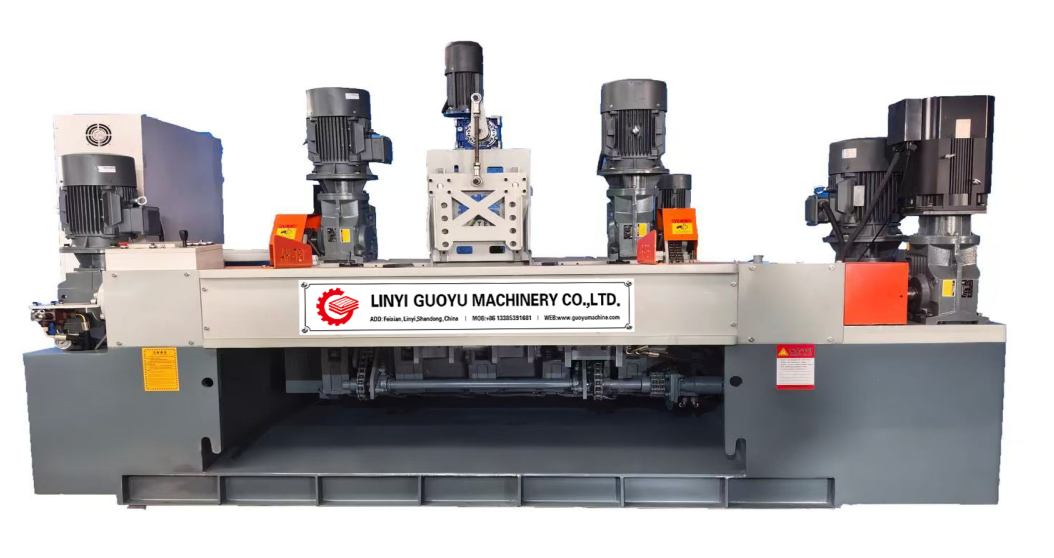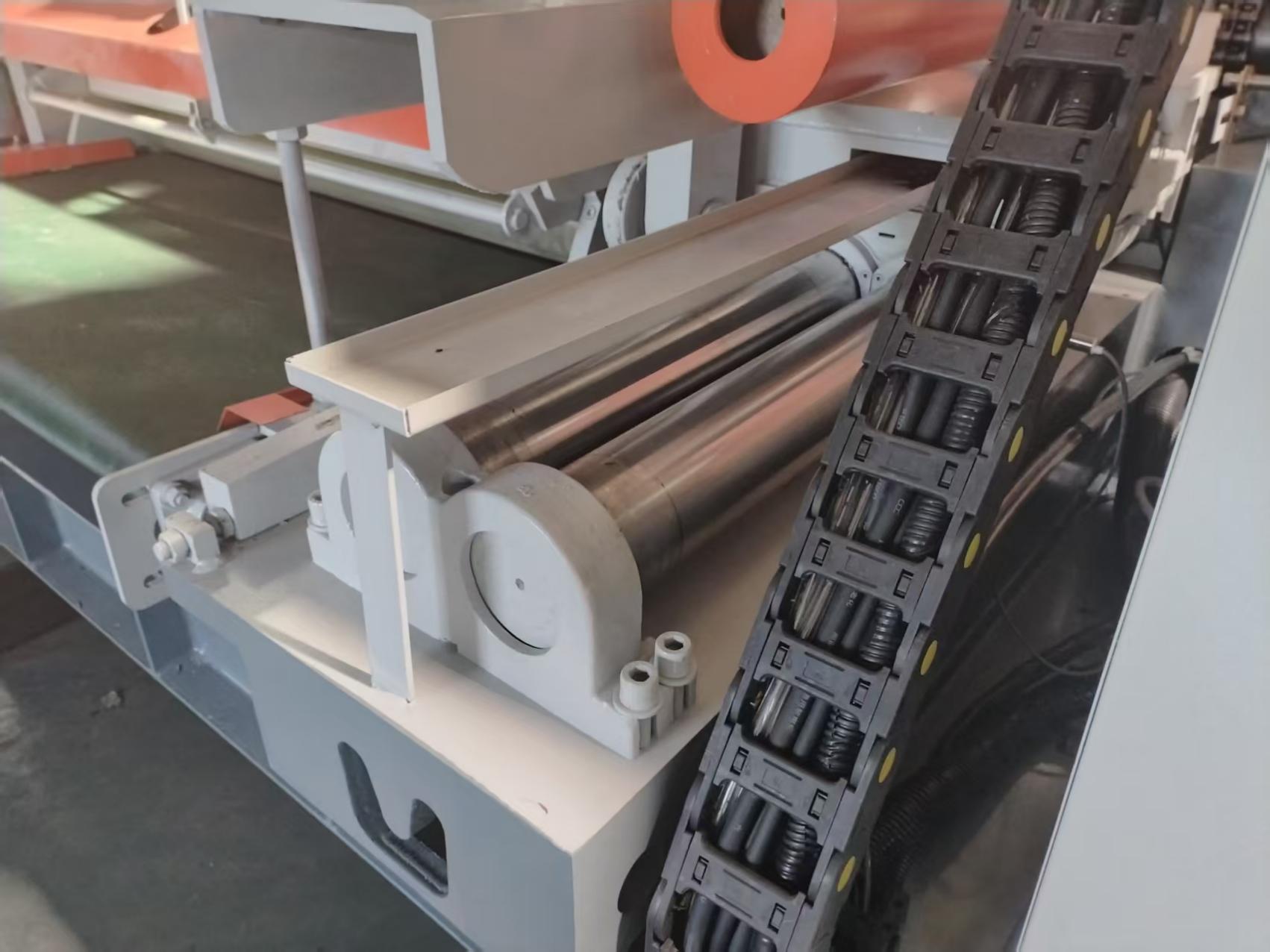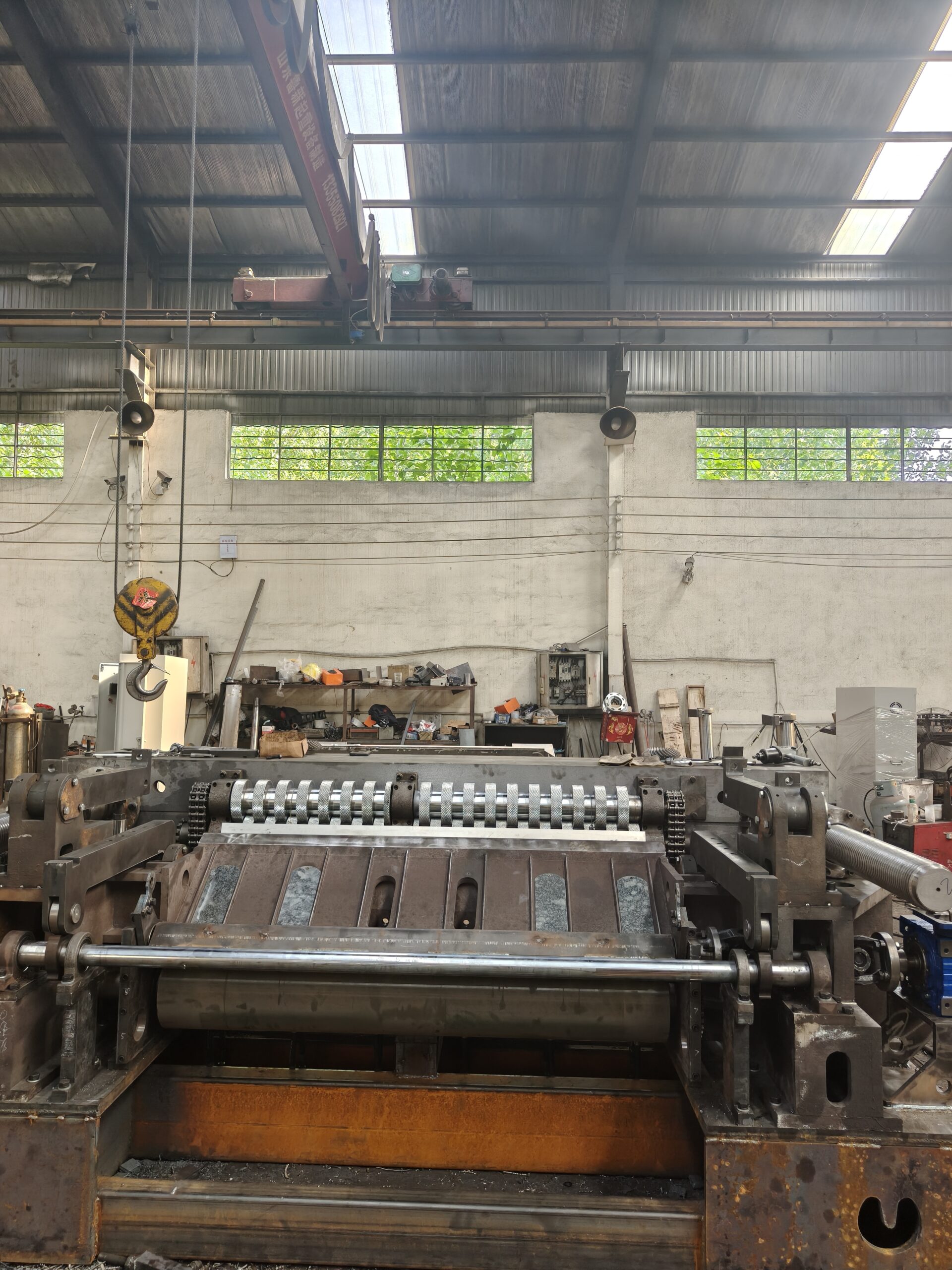

Southeast Asia is one of the best places in the world to build a plywood factory: plantation wood is close, labor costs remain competitive, and export demand from Japan, Korea, the Middle East, Europe and the United States keeps growing. But a plywood production line is only as strong as its weakest stage. A mill that buys machines one at a time, without a capacity plan, usually ends up with a fast peeler feeding a slow dryer, or a large press waiting on a manual lay-up crew.
This guide covers the full equipment list in production order, how to balance capacity between stages for 30–150 m³ per day, what you need to prepare on site, and the sequence that keeps a first-time investor out of trouble.
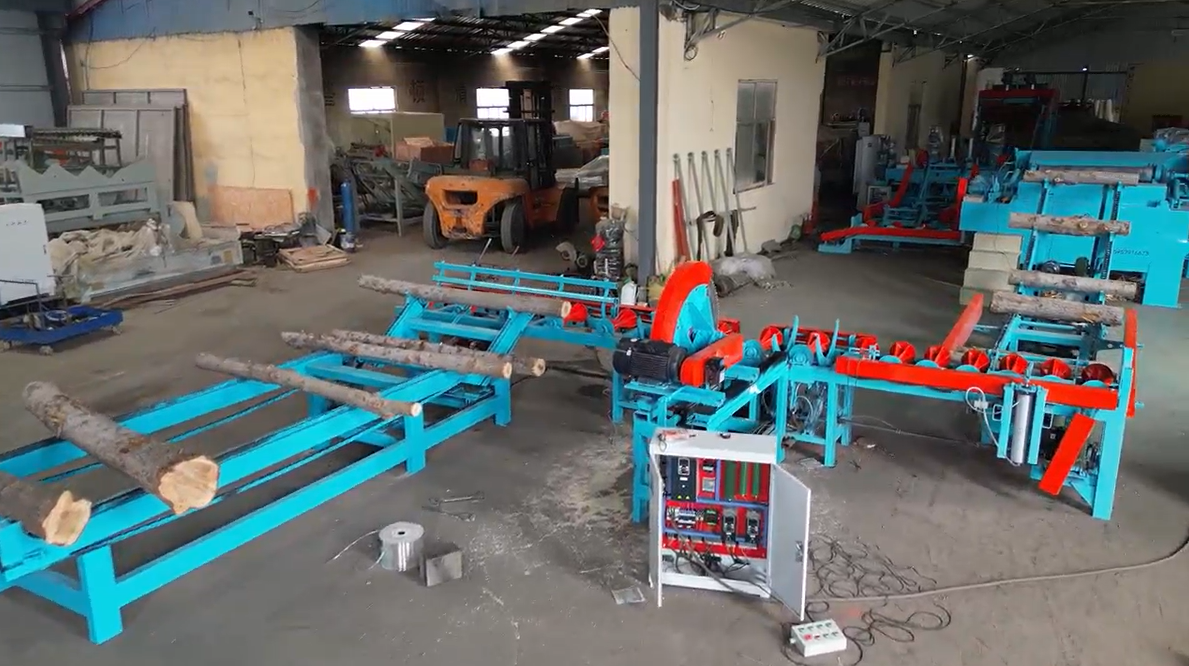
Start With the Product, Not the Machine
Before equipment selection, three decisions fix almost everything else:
- Board specification. Standard 1220 × 2440 mm panels, 4 × 8 ft formwork, thin boards under 6 mm, container flooring, or furniture panels? Thickness range and panel size set the press opening, platen size, sander width and saw configuration.
- Target output. Daily cubic meters determine how many layers the hot press needs, how long the dryer must be and how many peelers run in parallel.
- Target market standard. Export panels for Japan, Korea, the EU or the US require tighter thickness control, better surface quality, consistent glue spread and, in some cases, formaldehyde-related certification that must be planned for at the adhesive selection stage rather than added later.
Only after these three points are settled does it make sense to compare machine specifications.
The Full Plywood Production Line, in Order
1. Log handling and debarking
Logs are loaded and rounded before peeling. The debarker removes bark, sand and stones that wear the knife, and evens the log profile so the peeler can hold thickness.
Our range runs from a 4 ft log debarker up to a 2900 mm wood debarker. For high-volume yards, the 2700 mm debarker with a crushing system combines debarking, crushing and waste conveying so bark and chips are carried away as fuel or saleable material rather than labor.
2. Peeling and knife maintenance
The peeler determines your yield. Two configurations dominate in the region:
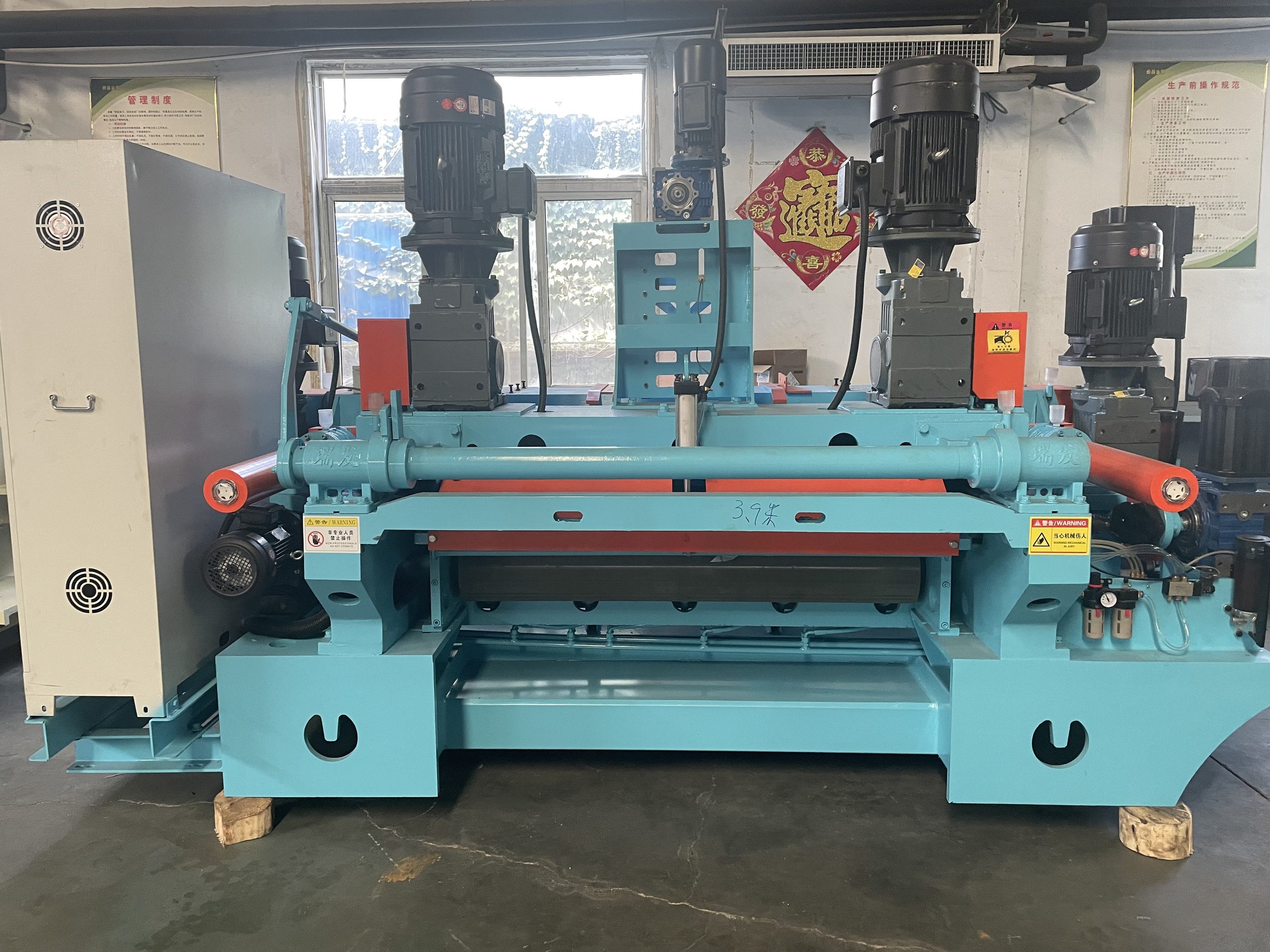
- Spindleless peeling for plantation logs. A 4 ft full-servo machine covers 0.8–4.0 mm thickness, 30–120 m/min and leaves a core as small as 26 mm.
- Spindle lathes for large-diameter or high-value logs, with max peeling diameter up to Φ1600 mm and thickness tolerance within ±0.05 mm.
Manual veneer receiving is fine for small lines. Beyond that, a stacker and an automatic peeling line keep pace with the dryer. A knife grinder belongs in the equipment list from day one — a blunt knife changes thickness, surface quality and core size.
3. Drying
Drying is the largest energy consumer and the most common bottleneck in a new plywood factory.
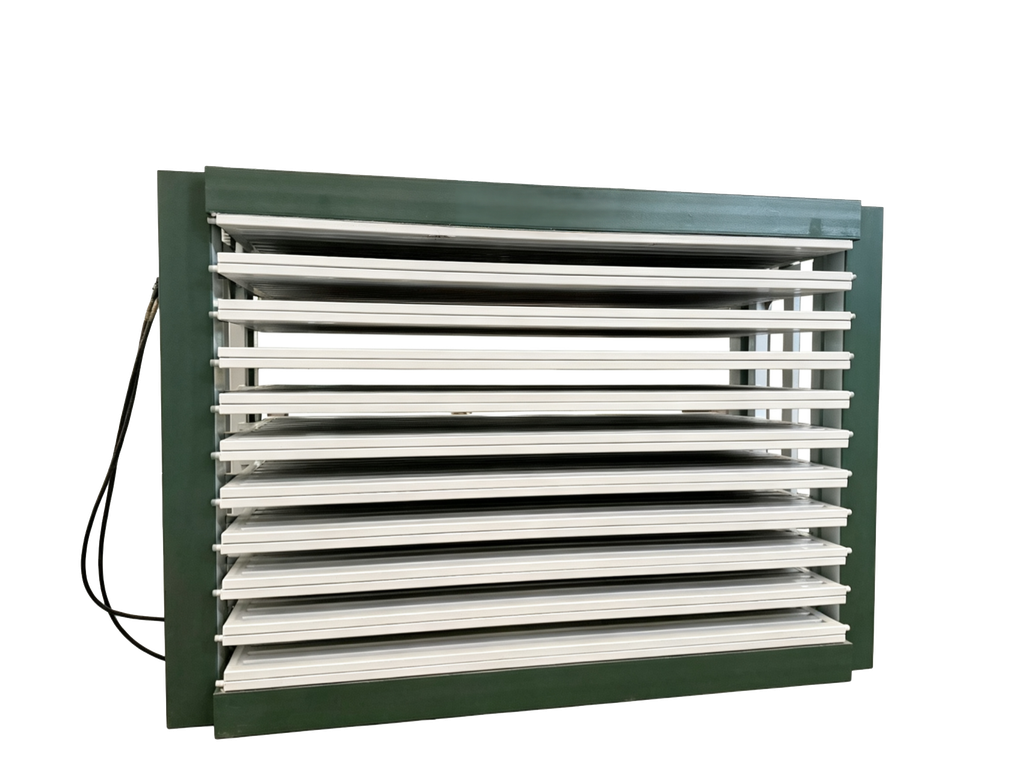
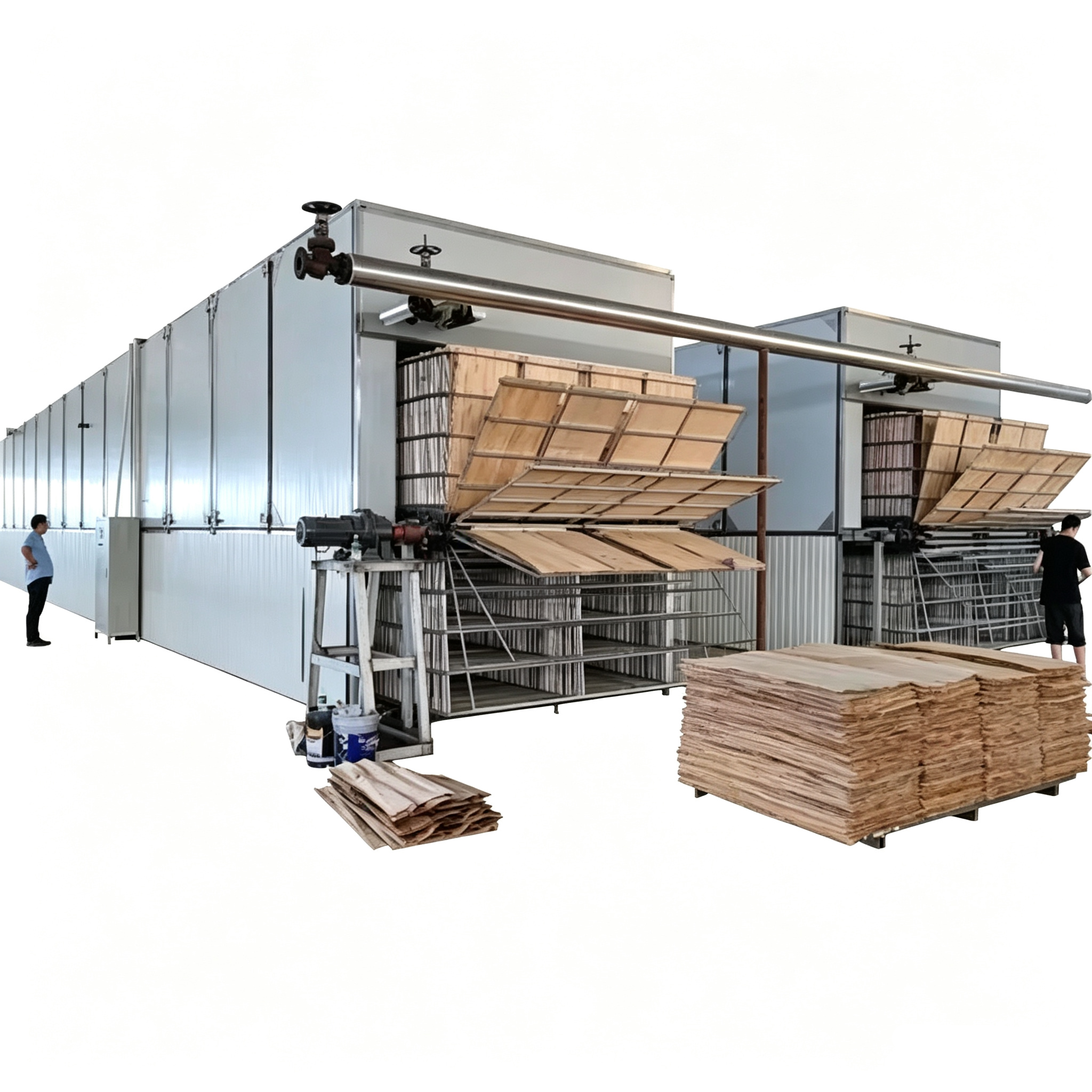
For core veneer, a four-layer roller dryer is specified for 1.0–4.0 mm veneer, 6 m³/h capacity, initial moisture of 50–60% and final moisture of 10% (±2%), with a 36 m heating section and a 4 m cooling section. Where the factory can burn its own wood waste, a 48 m double-deck dryer with a wood-burning furnace handles 2.5–3 m³/h at 140–180 °C and removes the need for a conventional boiler.
Mills producing both core and face veneer can use a roller and mesh 2-in-1 dryer, which covers 0.2–6 mm and reaches 12 ± 1% final moisture with independent temperature zones.
4. Core composing and lay-up
This is where manual labor disappears fastest. A horizontal core composer runs at 300–360 finished panels per hour with a 12.5 m line, while an L-type composer adds longitudinal finger jointing for wider core sheets. A 30 m core veneer paving line automates alignment and lay-up, preventing gaps, overlaps and warping before pressing.
For medium factories moving away from manual assembly, replacing hand assembly with automatic composers is often the highest-return upgrade on the whole line.
5. Glue spreading and pre-pressing
A glue spreader with a φ410 mm rubber roller and a φ273 mm steel roller applies a controlled, even film. Glue quantity is a cost and a quality variable at the same time: too little weakens the bond, too much wastes adhesive and raises cost.
Cold presses in the 400 T and 500 T class typically run an 1800 mm opening with 26 MPa working pressure, and a 500 t machine closes a full stroke in about 30 seconds. Pre-pressing stabilizes the assembly so the hot press can be fed without shifting.
6. Hot pressing
Layer count and automation level drive output and labor. Our range covers 11, 15, 25, 30 and 40-layer machines, including fully automatic presses with 4200 × 1370 mm platens and automatic thickness compensation.
Platen temperature is set by species and adhesive. As a reference from our 600-ton hot press specifications:
| Species | Density (kg/m³) | Hot pressing temperature | Pressure |
|---|---|---|---|
| Эвкалипт | 500–700 | 120–140 °C | 1.2–1.8 MPa |
| Rubberwood | 550–650 | 115–135 °C | 1.0–1.5 MPa |
| Pine | 450–550 | 110–130 °C | 0.8–1.2 MPa |
7. Sanding
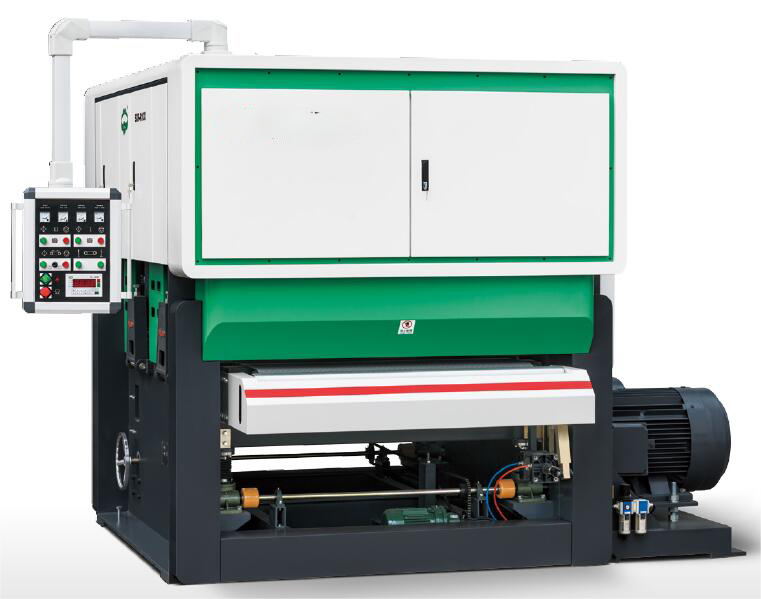
After pressing, panels need thickness calibration and surface finishing. Calibration sanding uses steel rollers with coarse belts to level thickness; finishing and polishing sanding uses rubber rollers and fine belts to produce a smooth surface.
Our calibration sander covers 40–1300 mm width and 3–80 mm thickness at 142.5 kW total power, with 23,000 m³/h dust extraction. Polishing sanders run lighter — around 59 kW — and are specified for surface quality rather than material removal.
8. Edge trimming
Final dimensions come from the DD saw or edge trimming saw. Diagonal error is specified within 0–0.5 mm on our semi-automatic DD saw, and within 0.05 mm on the roller-type trimming saw. A fully automatic cutting machine needs one operator at the touchscreen, which matters on a line running three shifts.
9. Auxiliary systems that are easy to forget
Glue preparation and mixing platform, steam or thermal oil boiler, dust collection ductwork, waste wood handling, compressed air, foundation and crane access, and electrical distribution. A new line fails on these details more often than it fails on the main machines.
Capacity Matching: Where Lines Actually Break
Three ratios decide whether a line runs smoothly:
Peeling versus drying. A full-servo peeler can produce far more veneer per hour than a single dryer can absorb. Match dryer capacity to peeling output, and keep a buffer of wet veneer rather than a queue of dryers.
Lay-up and glue spreading versus press cycle. If the lay-up crew cannot build assemblies as fast as the press can close, the press becomes an expensive shelf. This is exactly the problem automatic composers and paving lines solve.
Pressing versus finishing. Sander and saw throughput must clear what the press produces per shift. On high-output lines, a single sander or a semi-automatic saw is a common and unnecessary bottleneck.
The practical rule for Southeast Asian mills: plan drying and pressing first, then size peeling to feed them with headroom, then size finishing to clear the press output.
Two Reference Configurations
Starter configuration: around 30 m³ per day
This mirrors a recent turnkey project we delivered for a first-time investor, deliberately kept semi-automatic to control initial investment and risk:
| Stage | Equipment |
|---|---|
| Drying | 1 × double-deck roller veneer dryer |
| Pre-pressing | 2 × cold press machines |
| Горячее прессование | 2 × 15-opening hot press machines |
| Обрезка краев | 1 × semi-automatic edge trimming saw |
| Шлифование | 1 × heavy-duty sanding machine |
| Polishing | 1 × heavy-duty polishing machine |
| Auxiliary | Glue spreader, glue preparation platform, glue formulation and raw material supply, steam boiler system |
For an owner without production management experience, we also arranged an experienced Chinese plywood plant manager to lead startup, staff training and daily operations. That support model matters as much as the machine list for a first factory.
Export configuration: around 150 m³ per day
A Southeast Asian customer expanding into export markets built a new plant at a designed output of 150 m³ per day, targeting the US and European markets. The line is fully automated:
- Fully automatic rotary veneer peeling line with automatic feeding and a high-speed servo knife carriage
- Fully automatic core composer with automatic joint adjustment
- 30-layer fully automatic hot press with smart temperature and pressure control
- Fully automatic sanding line with multi-stage sanding, automatic thickness adjustment and surface inspection
- PLC and touchscreen HMI throughout, with remote monitoring and diagnostics
Equipment manufacturing took two months, and on-site installation and commissioning took one month. The customer’s own summary: automation reduced labor cost and production risk, and in a market where labor turnover is high, automation is the only way to keep quality stable.
Investment Order When Capital Is Limited
Not every investor can fund a complete line at once. The sequence below protects cash flow while keeping the factory expandable.
- Product definition and raw material test. Confirm the species, log diameter range and board specification. Test-peel your own logs before committing to a machine configuration.
- Peeling and drying first. These two stages determine yield and quality, and core veneer is a saleable product on its own. Many mills start by producing and selling core veneer to other plywood factories, then reinvest in pressing.
- Pressing and glue spreading second. Add the glue spreader, cold press and hot press once your veneer supply and market demand are proven.
- Finishing last. Sanding and edge trimming raise product grade and price, but they only pay back when pressing output is stable.
- Auxiliary systems in parallel, not afterward. Boiler, dust extraction, foundation and power supply must be designed with the equipment, because heavyweight presses require deep foundations — the 25-layer machine needs around 3000 mm base depth and the 40-layer machine around 5750 mm.
Preparing the Site Before the Machines Arrive
- Power supply. Confirm voltage and phase before ordering; most of our machines are built for 380 V / 50 Hz, with some export configurations at 415 V / 50 Hz. Available options per model are to be confirmed with our engineering team.
- Connected load. Individual machines range widely — a full-servo peeler around 58 kW, a four-layer roller dryer around 247.5 kW, a calibration sander around 142.5 kW. Total plant load requires a proper engineering calculation.
- Foundation and access. Heavy presses, dryers and sanders need reinforced foundations and crane access for installation.
- Dust extraction. Sanding lines need serious ductwork — 23,000 m³/h or more on calibration sanders — plus fire and explosion precautions.
- Covered storage. Dried veneer re-absorbs moisture in humid air, so covered storage between the dryer and the glue spreader is not optional.
- Training and spares. Plan for operator training, a maintenance schedule and a starter spare parts kit including blades, rollers, belts and bearings.
Five Mistakes First-Time Investors Make
- Buying the peeler first because it looks cheapest, without a drying or pressing plan.
- Undersizing the dryer to save capital, then discovering it caps the entire factory.
- Choosing hot press layer count by price instead of matching lay-up speed and board specification.
- Treating foundation, boiler, dust collection and electrical work as afterthoughts.
- Automating peeling and pressing but leaving lay-up and stacking manual, which recreates the bottleneck one step later.
Часто задаваемые вопросы
How much does a plywood production line cost?
Cost depends on board specification, target output, automation level and site conditions, so we quote per project rather than publishing a list price. Send your species, log diameter range, board size and thickness, and daily output target, and our engineers will prepare a configuration and quotation, normally within 48 hours.
How long does it take to build a plywood factory?
On a recent 150 m³ per day project, equipment manufacturing took two months and on-site installation and commissioning took one month. Smaller auxiliary machine orders move faster — a set of three automatic core composers was completed in 20 days. Civil works and foundation preparation usually run in parallel with equipment manufacturing.
Can I start with peeling and drying only?
Yes, and many mills do. Core veneer is sold to plywood factories, so a peeling and drying line can generate revenue while you prepare the capital and market for pressing, sanding and edge trimming.
Do I have to automate everything from the beginning?
No. A semi-automatic line at around 30 m³ per day is a reasonable entry point. Automation pays back fastest at the stages with the highest labor intensity and quality risk: core composing, lay-up, hot pressing and sanding.
What should be ready on site before the machines arrive?
Foundation and level floor, power supply matching the machine specification, water or steam supply, dust extraction, compressed air, crane access, covered veneer storage and trained operators. Confirming all of these before shipment prevents the most common installation delays.
Next Step
A profitable plywood production line is designed around your logs, your board specification and your market — not assembled from a catalogue. Send us your wood species, log diameter range, target panel size, thickness range and daily output, and our engineers will prepare a full line configuration, layout drawing and quotation, usually within 48 hours.
Review our full plywood line equipment here: https://www.guoyumachine.com/products