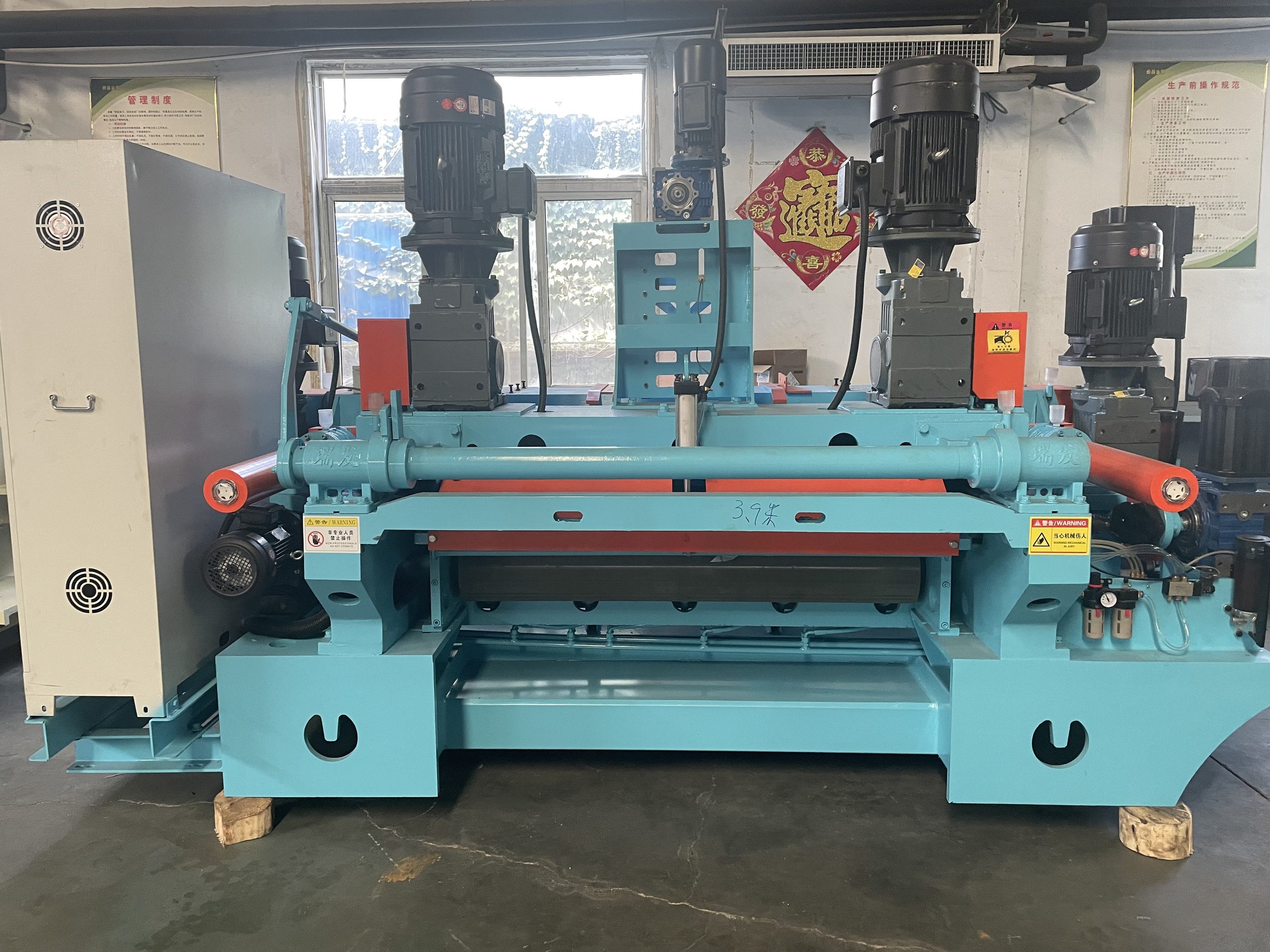

Two plywood mills in Southeast Asia can run the same peeling machine, the same settings and the same species — and still end up with very different knife bills, veneer grades and drying costs. The difference is usually one step earlier in the line. A log debarker machine is often treated as an optional pre-treatment unit, but it quietly controls three of the largest cost lines in a mill: how often you change knives, how much veneer has to be sorted or downgraded, and what you burn to dry your veneer.
This guide explains what each of those costs actually looks like, compares the debarker models we build for plantation logs and tropical hardwoods, and shows how to match a debarker to your peeling capacity.
A Debarker Is Not a “Nice to Have” — It Controls Three Costs
The common assumption is that debarking is a hygiene step: it makes the log yard look tidier. In practice, bark, sand and stones are the raw material of three separate cost problems.
| What the debarker removes | Cost it protects |
|---|---|
| Bark, sand, grit and stones | Peeling knife life, grinding frequency and unplanned downtime |
| Oval log profile and surface irregularities | Veneer thickness accuracy, veneer grade and sorting labor |
| Bark, chips and wood residue | Drying fuel, if your furnace burns the mill’s own waste |
That third line is the one most mills overlook. A debarker is not only a preparation machine; in a well-designed line it is also the first stage of your fuel supply.
Cost 1 — Peeling Knife Life and Downtime
Bark is not soft. It holds grit, sand and small stones that behave like abrasive paste against a rotary knife edge. When those particles reach the knife, three things happen in sequence:
- Edge wear accelerates. A dulled knife increases cutting resistance and starts pulling fibers instead of slicing them.
- Veneer quality drops. Worn knives produce rough surfaces, uneven thickness and more tear-out, all of which show up as defects downstream.
- Grinding intervals shorten. More frequent knife changes mean more unproductive hours, and each change is a stoppage on the whole line.
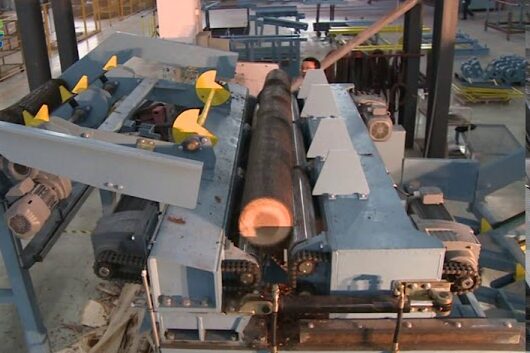
Debarking also restores geometry. A log that is oval, ridged with bark or carrying embedded grit presents an inconsistent cutting load, which shows up as thickness variation across the sheet. Rounding the log first gives the peeler a uniform profile to work with, and the peeling knife then holds tolerance rather than fighting the log.
The improvement in knife life depends on your species, bark thickness and how much sand your logs carry, so the payback should be measured on your own logs rather than assumed. To be confirmed for your specific supply.
Cost 2 — Veneer Grade and Sorting Labor
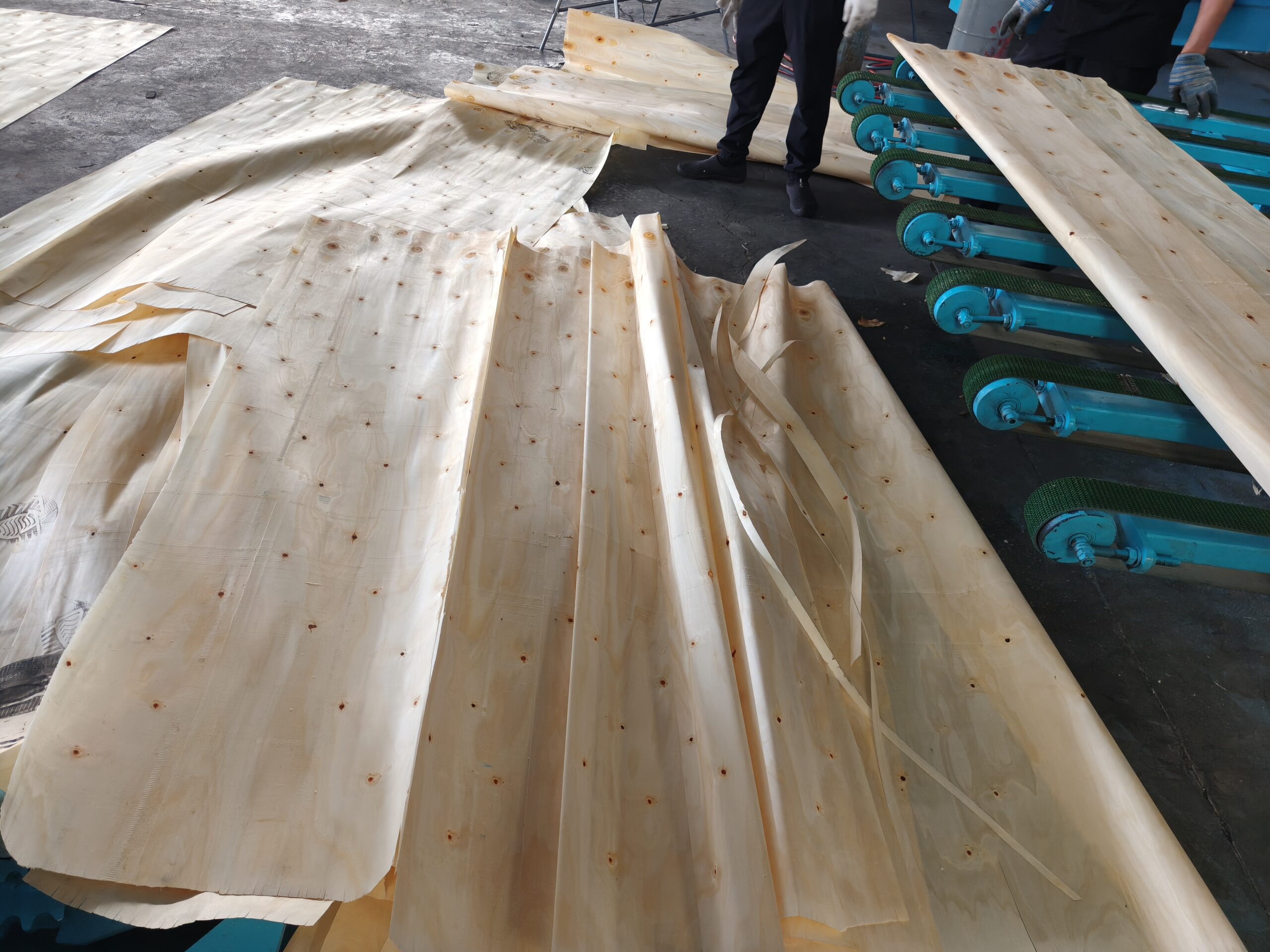
Logs that go straight to the peeler without debarking produce lower-grade veneer that has to be manually sorted. That sorting is not free: it consumes floor space, adds workers, and slows the flow into drying and pressing.
The quality effects are specific:
- Bark inclusions carry through into the veneer surface as dark patches and defects that cannot be removed later.
- Sand and grit score the veneer surface and create local thickness variation.
- Oval logs peel unevenly, so thickness drifts around the log rather than staying constant.
- Contaminated loads can also affect the hot press, because hard particles that survive peeling reach the pressing stage.
In Southeast Asian mills running mixed plantation supply — Sengon, Meranti, eucalyptus, rubberwood — the sorting problem compounds, because a mixed intake already generates more variation than a single-species line. Removing the bark and rounding the log before peeling is the cheapest way to reduce that variation.
Cost 3 — Fuel: Turning Bark and Chips into Boiler Feed
This is where log preparation stops being a cost centre and starts paying for itself.
Our 2700 mm wood debarker with a crushing system combines debarking, crushing and waste conveying in one unit: two 11 kW crushing motors break down bark and residue, and a 2.2 kW conveyor carries the material away instead of leaving it in the yard for manual handling.
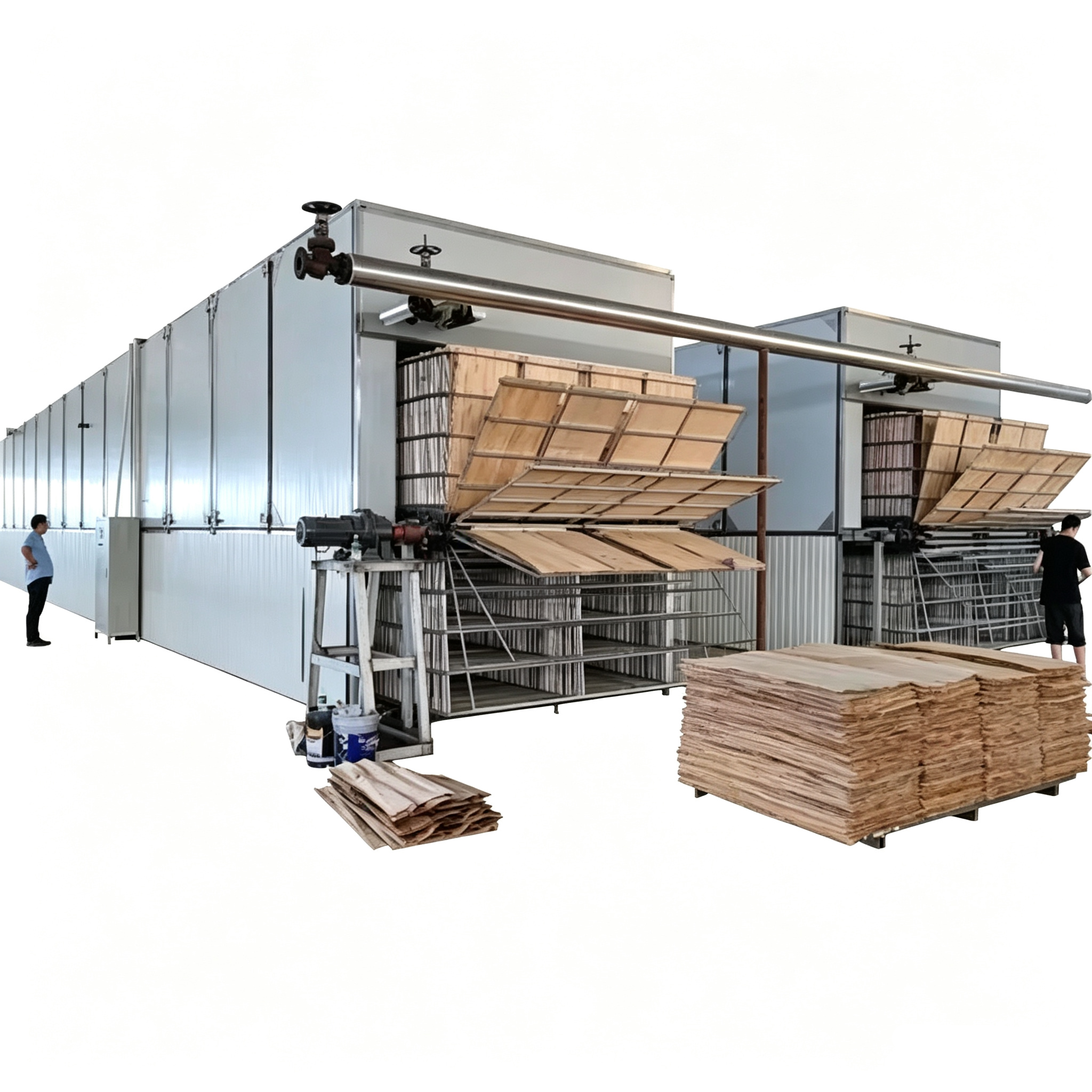
That material has value. Our 48 m double-deck veneer dryer with a wood-burning furnace is designed to burn exactly this kind of fuel — crushed bark, wood chips, sawdust, rice husks and biomass pellets — at an adjustable 140–180 °C, with a listed thermal efficiency of 75–85%. The furnace generates hot air directly, which removes the need for a conventional boiler and the purchased fuel that comes with it.
We have already delivered this combination to the region. A Thai wood processing company peeling and drying rubberwood and eucalyptus replaced its conventional boiler with a 2 m wood-burning furnace and now uses its own wood waste as the heat source, with veneer moisture holding close to its 10% target.
Fuel consumption per cubic meter of veneer depends on the moisture of the fuel and of the incoming veneer, so the fuel rate for your mill is to be confirmed by our engineers once your waste volume and drying load are known.
Model Comparison for Southeast Asian Logs
Our debarker range is built around logs from roughly 80–100 mm minimum working diameter up to 650 mm, which covers plantation Sengon and Albasia at the small end and tropical hardwoods such as eucalyptus, rubberwood and Meranti at the large end.
| Model | Max log diameter | Min working diameter | Rollers | Speed | Weight | Примечания |
|---|---|---|---|---|---|---|
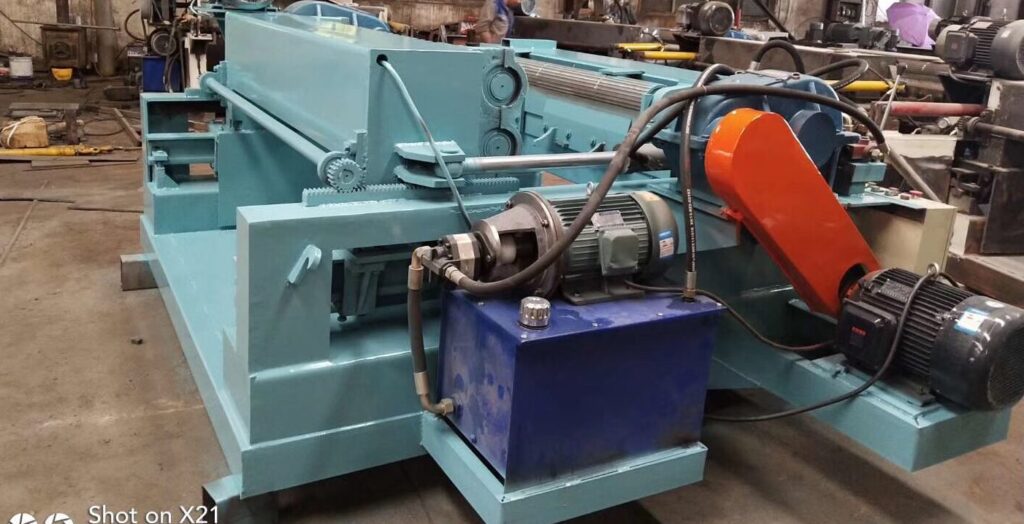
| 4 ft Log Debarker | 650 mm | 80 mm | Double Ø150 mm, 11 kW; single Ø150 mm, 11 kW | 52 m/min | 4.5 t | Hydraulic feed 5.5 kW, crushing motor 11 kW, 2 sets of oil-immersed slideways |
| 1500 mm Hydraulic Wood Debarker | 650 mm | 100 mm | Double Ø200 mm, 11 kW; single Ø180 mm, 11 kW | 52 m/min | 4.6 t | 350 and 250 reducers, hydraulic feed 5.5 kW, crushing 11 kW, rounding depth 1.5–3.8 mm |
| 1500 mm Hydraulic Model | 650 mm | 80 mm | Double Ø150 mm, 11 kW; single Ø150 mm, 11 kW | 52 m/min | 4.6 t | Hydraulic drive, Siemens Beide motors, oil-immersed slideways |
| 2600 mm Log Debarker | 650 mm | 100 mm | Double Ø200 mm, 11 kW × 2 (350 reducer); single Ø150 mm, 7.5 kW × 2 (250 reducer) | 45 m/min | 5.8 t | Heavy-duty double/single roller design, rounding depth 1.5–3.6 mm |
| 2700 mm Wood Debarker with Crushing System | 650 mm | 100 mm | Double Ø200 mm, 11 kW × 2; single Ø150 mm, 11 kW × 2 | 45 m/min | 8.6 t | Crushing 11 kW × 2 at 415 V/50 Hz, waste conveyor 2.2 kW, side centering rollers and hydraulic guides |
| 2900 mm Wood Debarker | 600 mm | 100 mm | Double Ø230 mm sprocket type, 11 kW × 2; single Ø180 mm sprocket type, 11 kW × 2 | 45 m/min | 6.0 t | Chain-sprocket rollers for stronger grip and smoother feeding, 4800 × 2250 × 1750 mm |
Two selection notes. First, the 2900 mm model uses sprocket-type rollers rather than smooth rollers — the stronger grip matters when logs are large, wet or unevenly shaped. Second, the crushing model is the one to choose when the yard needs bark and residue removed as conveyed material rather than as manual labor.
If your debarker lives inside an automatic line
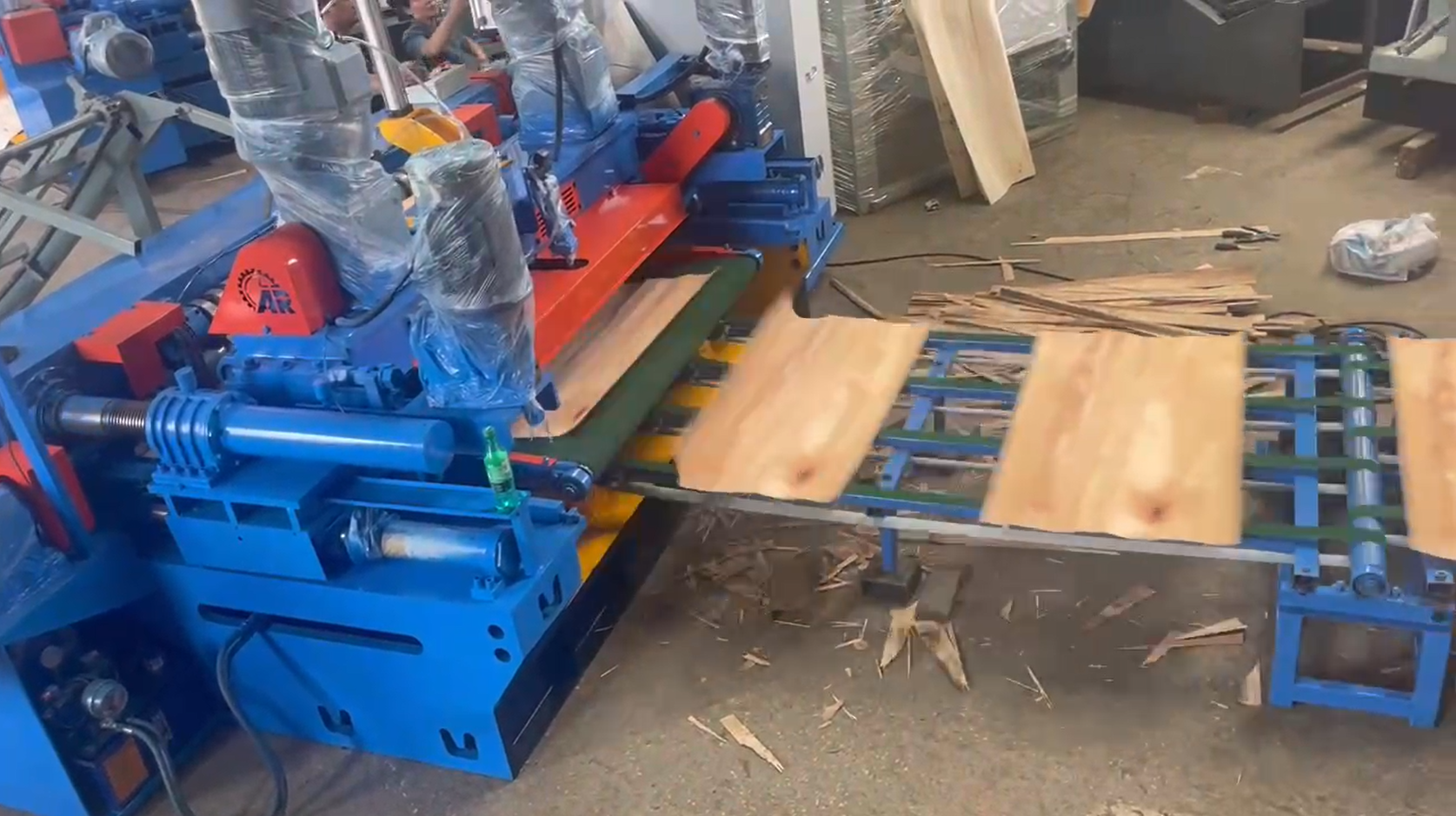
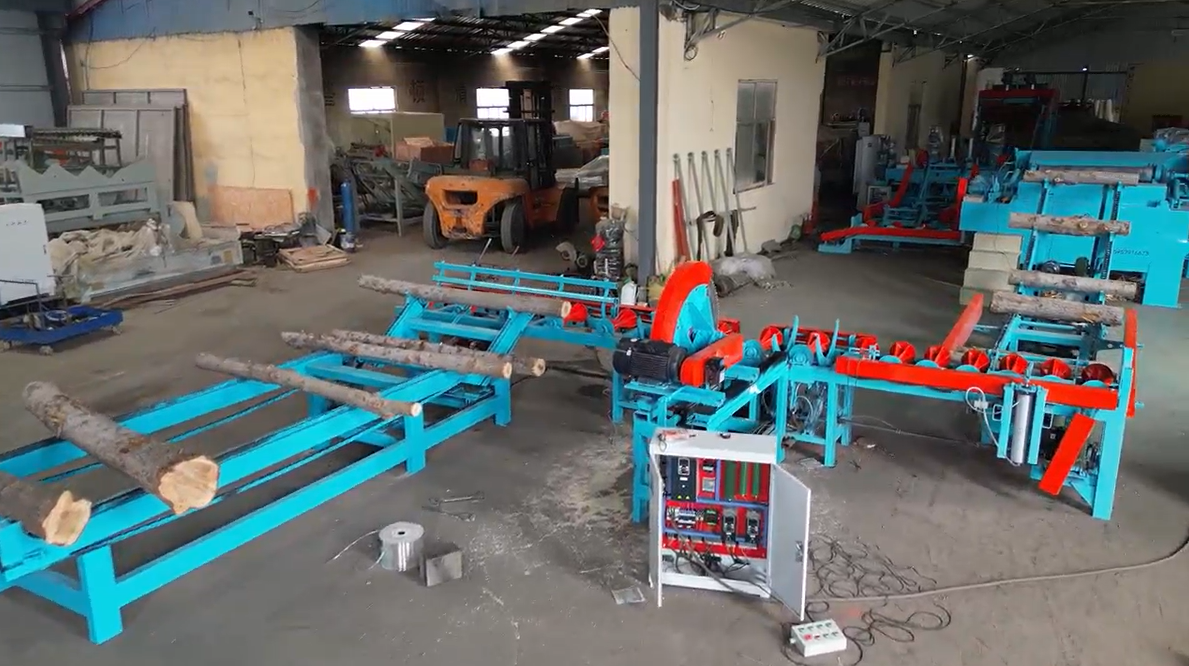
Standalone debarkers are not the only option. Our automatic plywood veneer peeling production line includes a loading conveyor, a debarker, the peeling machine and a stacker as one continuous unit. That inline debarker is specified for logs of 970–1270 mm length and up to 600 mm diameter, with a rounding thickness of 2.0–6.0 mm, a working speed of 50 m/min and 27.5 kW of installed power.
The trade-off is flexibility. Running debarking and peeling as separate machines gives you more control over each stage and keeps the peeler free of bark handling, which is why many mills in the region prefer a standalone debarker feeding an independent peeling line.
Matching One Debarker to Your Peeling Capacity
This is the question that decides how much you spend on your log debarker machine. Published guidance suggests one debarker can generally supply up to three rotary peeling machines, but the real answer depends on your own numbers:
- How many logs per shift, not how many cubic meters — debarkers work in pieces.
- Average rounding passes per log, which depends on how oval your supply is. Heavily crooked logs need more passes and reduce effective throughput.
- Log length. A 4 ft peeling line pairs with the 4 ft or 1500 mm debarker; 8 ft lines need the 2600 mm, 2700 mm or 2900 mm models.
- Species and diameter mix. Sengon and Albasia at the small end behave very differently from 650 mm hardwood logs, and the machine must cover your whole intake rather than the average.
- Speed matching. Debarker throughput runs at 45–52 m/min depending on the model, so your peeling speed and feeding arrangement have to be planned together rather than separately.
For small and medium mills, the practical risk is not buying a debarker that is too slow — it is buying one that is too small for the largest logs that arrive in the rainy season, then bypassing it under pressure. Size the opening for your biggest logs, not your most common ones. The number of debarkers required for your specific intake is to be confirmed once your log data is available.
Maintenance That Protects Rounding Accuracy
A debarker that loses accuracy stops protecting the knife, so maintenance belongs in the production plan rather than the repair list:
- Oil-immersed slideways (2 sets on the 4 ft and 1500 mm models). Keep lubrication on schedule; dry slideways introduce play that shows up as uneven rounding.
- Roller wear. On sprocket-type rollers such as the 2900 mm model, worn teeth reduce grip and cause logs to slip or wander.
- Hydraulic feed pressure (5.5 kW system). Pressure drift changes the rounding depth and the load on the log.
- Crushing blades. On the 2700 mm crushing model, dull blades raise power consumption and reduce waste throughput.
- Centering and guide rollers. The 2700 mm and 2900 mm models use hydraulic side centering rollers and guides; if they fall out of alignment, logs enter the peeler off-center.
Часто задаваемые вопросы
Do I need a debarker if my logs already look clean?
Visible cleanliness is not the test. Bark holds embedded sand and grit that you cannot see, and it is those particles that wear the peeling knife. If your logs are delivered with bark and travel over dirt roads or riverbanks, a debarker pays for itself through knife life alone.
How many peeling machines can one log debarker machine supply?
Published guidance suggests one debarker can supply up to three rotary peeling machines, but that ratio assumes normal log shape and steady feeding. Crooked, heavily oval logs require more rounding passes and reduce effective capacity, so calculate the requirement from your logs per shift rather than from the ratio.
Can a debarker handle small-diameter plantation logs?
Yes. Our models work down to a minimum working diameter of 80–100 mm, which covers plantation Sengon, Albasia and small eucalyptus logs. The upper limit is 650 mm on most models and 600 mm on the 2900 mm machine, so a single unit can usually cover a mixed intake.
What does the crushing system actually add?
It turns bark from a disposal problem into a conveyed material. The 2700 mm model uses two 11 kW crushing motors and a 2.2 kW conveyor to break down bark and residue and carry it away — material that can then feed a biomass furnace for veneer drying instead of being handled manually.
Does the debarker really affect my drying fuel cost?
It can, if your dryer runs on a biomass furnace. Bark, chips and sawdust from the debarking stage become the fuel that generates 140–180 °C hot air in our wood-burning dryers, replacing purchased boiler fuel. Actual savings depend on your waste volume and the moisture of both fuel and veneer.
Next Step: Size the Debarker to Your Logs
The right debarker is defined by your intake: species, diameter range, log length, how crooked the logs arrive and how many pieces pass through per shift. Send us those five details, along with your peeling capacity and whether you plan a biomass furnace, and our engineers will recommend the model, the roller configuration and the waste handling arrangement, usually within 48 hours.
Review our log debarker range here: https://www.guoyumachine.com/products.
For the wider peeling stage, see our veneer-peeling-machine-southeast-asia.