
Meta Description: Choose the right veneer peeling machine for Southeast Asia: log species, diameter, spindle vs spindleless, thickness tolerance and service in Indonesia, Vietnam and Thailand.
URL Slug: veneer-peeling-machine-southeast-asia
Tags: Veneer Peeling Machine, Southeast Asia Plywood, Spindleless Veneer Peeler, Rubberwood Veneer, Plywood Production Line
Primary keyword: veneer peeling machine for Southeast Asia
Secondary keywords: spindleless veneer peeling machine, veneer peeling machine for rubberwood, eucalyptus veneer peeling machine, rotary veneer lathe
How to Choose a Veneer Peeling Machine for Southeast Asia: A Buyer’s Guide for Indonesia, Vietnam, Thailand and Malaysia
Southeast Asia’s plywood industry now runs on plantation wood: Albasia in Indonesia, rubberwood in Thailand, eucalyptus and acacia in Vietnam, Meranti and Keruing in Malaysia. Each of those species behaves differently at the knife, which is why the cheapest veneer peeling machine for Southeast Asia is rarely the one that makes you money. Four decisions determine whether a peeler performs for ten years or sits idle for two: log species, log diameter, target veneer thickness and the machine structure that holds tolerance over time.
Why Log Species Comes First
Buyers often start with price and capacity. The question that actually drives your configuration is simpler: what are you feeding the machine?
Density and fiber structure change everything downstream of the knife.
Dense hardwoods such as eucalyptus, rubberwood, acacia and keruing have tight fibers and high cutting resistance. Any vibration in the knife carriage shows up directly as knife marks, wavy surfaces and thickness variation. These species need a heavier frame, larger motors, rigid knife-carriage bases and strong hydraulic knife clamping.
Softwoods and light woods such as Albasia (Sengon), pine and Malacca cut more easily, but their fibers are loosely packed. They tend to tear instead of slice, especially when peeling speed is too low or roller pressure is wrong. Here, the precision of the knife table and the consistency of feeding matter more than raw motor power.
Thickness expectations differ too. On our hardwood peeling models, veneer thickness is typically held within ±0.05 mm. Softwood machines are commonly specified at ±0.1 mm, which is acceptable for core veneer but not for high-grade face veneer.
As our own selection guide puts it, the density and hardness of the wood determine the knife holder, motor power and overall machine structure. Species is not a detail — it is the starting point.
A Species Map for Southeast Asia
| Wood group | Species you will actually see | How it behaves at the knife | What the peeler must deliver |
|---|---|---|---|
| Dense hardwood | Eucalyptus (Vietnam’s main core species), rubberwood (Thailand, Vietnam, Malaysia), acacia, keruing | High cutting resistance; tight fibers; vibration turns into thickness deviation and knife marks | Heavy-duty frame, 11–15 kW class drive motors, rigid or cast knife carriage, hydraulic knife clamp, servo feeding |
| Soft to medium wood | Albasia / Sengon (Indonesia), Malacca / Meranti (Indonesia, Malaysia), pine | Low density and loose fibers; cuts easily but fuzzes, tears and back-cracks when speed or knife settings are wrong | Higher consistent peeling speed, precise knife table, adjustable single and double roller pressure |
Species notes from the region
- Эвкалипт is the backbone of Vietnam’s plywood industry. Our market notes put Vietnam’s eucalyptus plantation area at roughly 300,000 hectares with annual output of 6–9 million m³. It peels cleanly when fiber is consistent, but it is dense enough to punish a light-duty machine.
- Rubberwood and acacia are Thailand’s plantation staples, and a Thai producer we worked with peels and dries both at commercial scale. Rubberwood is a genuine hardwood: budget for motor power and knife wear, not just purchase price.
- Albasia (Sengon) is Indonesia’s lightweight plantation wood, widely used for formwork, walls, roofs, subfloors, packaging and pallets. Its low density makes it easy to cut and difficult to cut cleanly.
- Malacca / Meranti is relatively soft. High-speed cutting is recommended, because low speed tends to cause severe tearing of the surface fibers.
- Керуинг is dense, high-value and often used for container flooring, where thickness accuracy matters more than throughput.
Blade and setting starting points for soft tropical wood
If you peel Albasia, Sengon or Malacca, these settings are a practical starting point:
| Setting | Starting point |
|---|---|
| Угол наклона ножа | 21°–22° |
| Pitch gap (drop) | 42–44, adjusted to wood hardness |
| Knife height | 126.5–127.5 mm for veneer of 1.6–3.2 mm |
| Knife gap | 1.2–1.4 × veneer thickness (2.0 mm veneer → 2.4–2.8 mm gap) |
These are starting points, not universal settings. Wood properties change by region and even between plantations, so the parameters must be tuned against your actual logs. There is no single machine setting that works for every species in Southeast Asia.
Spindleless or Spindle Peeler? Match the Machine to Your Logs
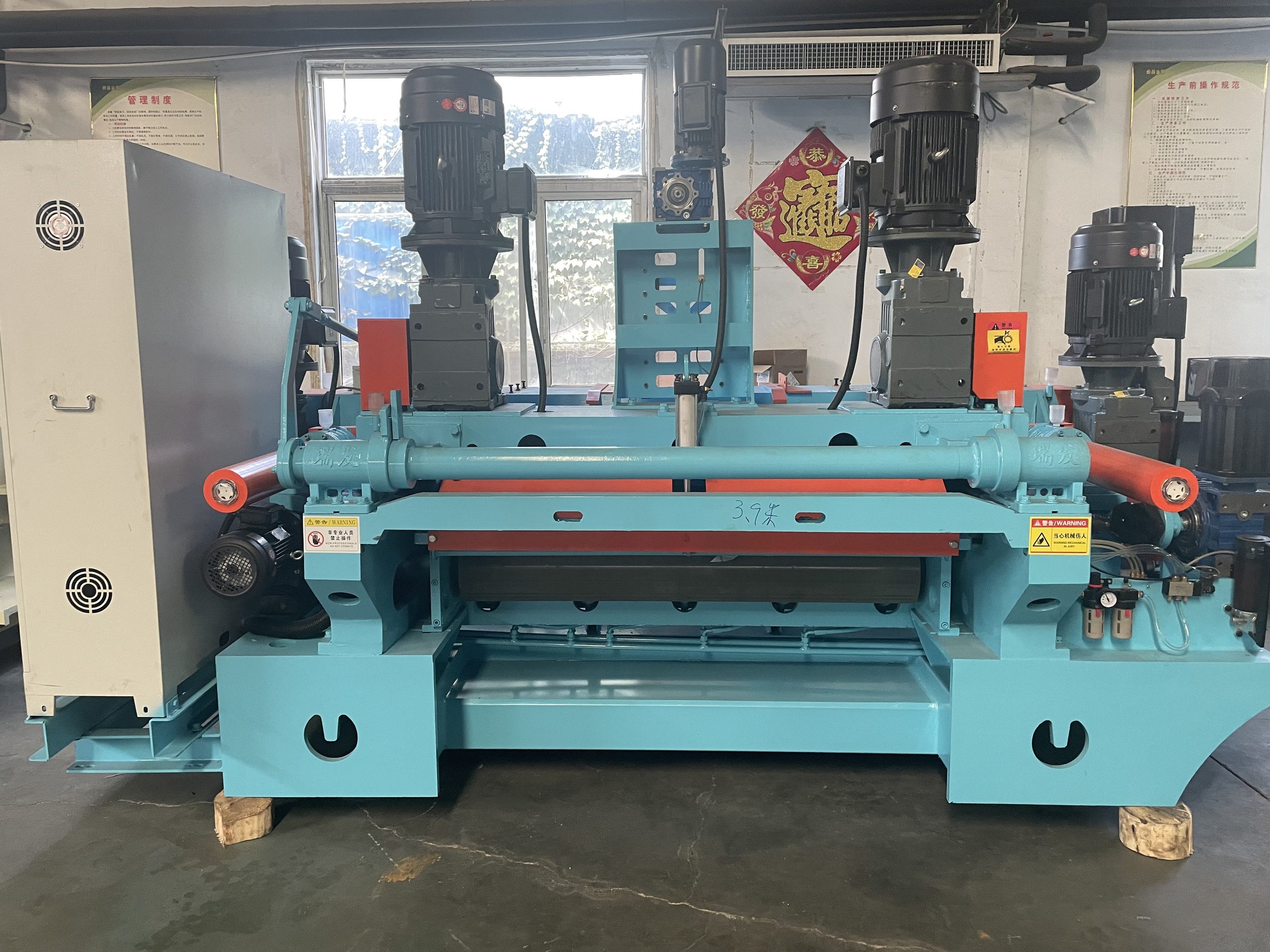
Most veneer peeling machines installed in Southeast Asia are spindleless. But the spindle lathe has not disappeared, and choosing the wrong type is an expensive mistake.
| Feature | Spindleless peeler | Spindle (hydraulic) lathe |
|---|---|---|
| Log diameter | Up to roughly 600 mm; sweet spot below 400 mm, and effective even on small logs of 80–100 mm | 600 mm and above, up to Φ1600 mm |
| Leftover log core | As small as 24–26 mm on our heavy-duty spindleless models | Commonly 40–70 mm; our spindle lathe is specified with a minimum remaining core of Φ120 mm |
| Thickness tolerance | ±0.05 mm on heavy-duty servo models; ±0.1 mm on softwood models | ±0.05 mm standard; ±0.03 mm or better on the high-precision servo model |
| Peeling speed | 30–120 m/min on full-servo models | Softwood 50–80 m/min; hardwood 30–60 m/min |
| Автоматизация | Integrates naturally with automatic charging, conveying, stacking and in-line production | Manual or semi-automatic log charging is typical |
| Best for | Core veneer, high recovery, plantation logs, automated lines | Large-diameter logs, high-value face veneer, thin and precise veneer |
Use three questions to decide:
- What is your dominant log diameter? Mostly above 250–300 mm with a face veneer requirement points to a spindle lathe. Mostly below 300 mm, where recovery decides your margin, points to a spindleless machine.
- How much of your log becomes waste? A spindle lathe gives up a larger core. A spindleless peeler turns that core into sellable veneer.
- How automated is the rest of your line? Spindleless machines are the easier fit for continuous, low-labor lines. Spindle lathes still win where precision on expensive timber is the priority.
For a mill running a mixed log supply, the optimal answer is sometimes both machines on one line: the spindle lathe for large, high-value logs, and the spindleless peeler for the plantation logs that follow.
Do not forget the step before peeling
Whichever type you choose, the debarker decides how well it performs. Removing bark, sand and stones protects the peeling knife, and rounding the log improves thickness accuracy. Our debarker range starts at a 4 ft log debarker and runs up to the 2900 mm wood debarker, with a debarking and crushing model for high-volume yards.
The Specification Checklist That Actually Matters
When you compare a veneer peeling machine for Southeast Asia, price and motor kW are the easiest numbers to find and the least useful on their own. Ask for these nine values in writing, measured against your own log supply.
- Peeling thickness range. 0.5–4.0 mm covers most core and face veneer work. Face veneer machines go down to 0.3 mm, and some heavy-duty core machines cap at 2.6 mm.
- Thickness tolerance. ±0.05 mm for hardwood, ±0.1 mm for softwood. Request the tolerance guaranteed on your species, not the tolerance printed in a catalogue.
- Maximum log diameter. 500–550 mm on most spindleless models. Confirm this against the largest logs you actually receive, not the average.
- Minimum core diameter. 24–26 mm on heavy-duty spindleless models; 35 mm on our 10 ft face veneer machine; Φ120 mm on the spindle lathe. This single number drives your yield.
- Peeling speed. 30–120 m/min on full-servo machines. Softwood is normally run at 60–100 m/min; going slower increases fiber tearing rather than improving quality.
- Log length and knife size. A 1500 × 180 × 16 mm rotary knife for 4 ft logs; 8 ft and 10 ft machines for longer log sections and face veneer.
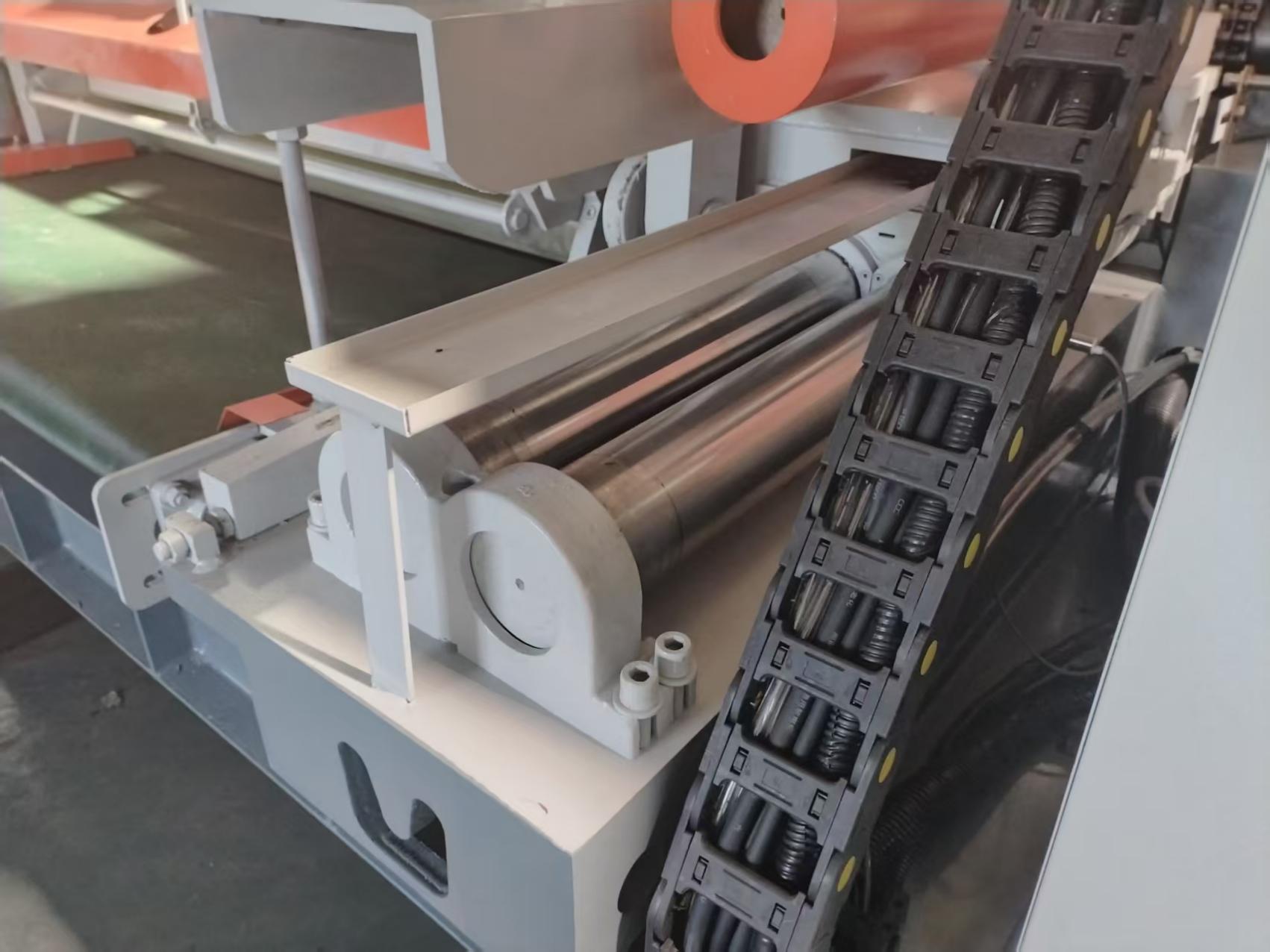
- Guide and screw system. Linear guide rails and oil-immersed slide bars with a Ø95–Ø116 mm lead screw are the specifications that hold accuracy over years of production.
- Roller and gearbox configuration. K87 and R87 hard-tooth-surface reducers with 11–15 kW motors are what carry hardwood duty without premature failure.
- Control system. PLC with touch screen, full servo control of feeding, single and double rollers and clipping, automatic knife gap adjustment, and a camera monitoring system.
Configurations We Build for the Region
| Your production situation | Recommended model | Key specifications | Why it fits |
|---|---|---|---|
| Indonesian Albasia / Sengon, softwood core veneer | Softwood Veneer Peeling Machine | 0.5–4.0 mm; ±0.1 mm; 100 m/min; logs 50–500 mm; 7 t | Speed and knife pressure tuned for loose fibers; suitable for pine and Albasia |
| General core veneer, mixed plantation wood | Машина для снятия шпона с древесины | 1.0–4.0 mm; 0–100 m/min; logs from Ø500 mm down to a Ø32 mm core; total power 58.2 kW | Double-roller moving structure with a fixed knife carriage, three-point linear screw assembly and base linear guides |
| Vietnamese eucalyptus and Thai rubberwood, hardwood duty | Heavy Duty Wood Veneer Peeling Machine for Hardwood | 0.8–4.0 mm; 30–120 m/min; max log 550 mm; min core 24 mm; 9.0 t | Built for eucalyptus, rubberwood, birch and mixed dense hardwoods; thicker frame, hydraulic knife clamp, servo feeding |
| Hardwood with a tight tolerance requirement | Литье тяжелого токарного станка с ЧПУ для снятия шпона с твердой древесины | ±0.05 mm; 0.8–4.0 mm; 30–120 m/min; min core 26 mm | Cast knife carriage and cast single/double roller bases absorb vibration on dense wood |
| High recovery from 4 ft logs | 4 ft Veneer Peeling Lathe with Full Servo Motors | 0.8–4.0 mm; 30–120 m/min; max log 550 mm; min core 26 mm | Servo control of feeding, rollers and clipping keeps thickness consistent at low speed and high load |
| 8 ft / 10 ft face veneer production | 10-футовая машина для снятия шпона без вала | 1.0–2.6 mm; 0–80 m/min; max log 550 mm; min core 35 mm; 88 kW; 13.5 t | 18.5 kW servo feeding system, 65# upper linear guide rail and heavy 13.5 t frame |
| Large-diameter, high-value logs | Токарный станок для снятия шпона | Max Φ1600 mm; 0.5–3.0 mm; min core Φ120 mm | Thickness tolerance within ±0.05 mm, and ±0.03 mm on the high-precision servo model, for expensive timber such as Keruing and Okoume |
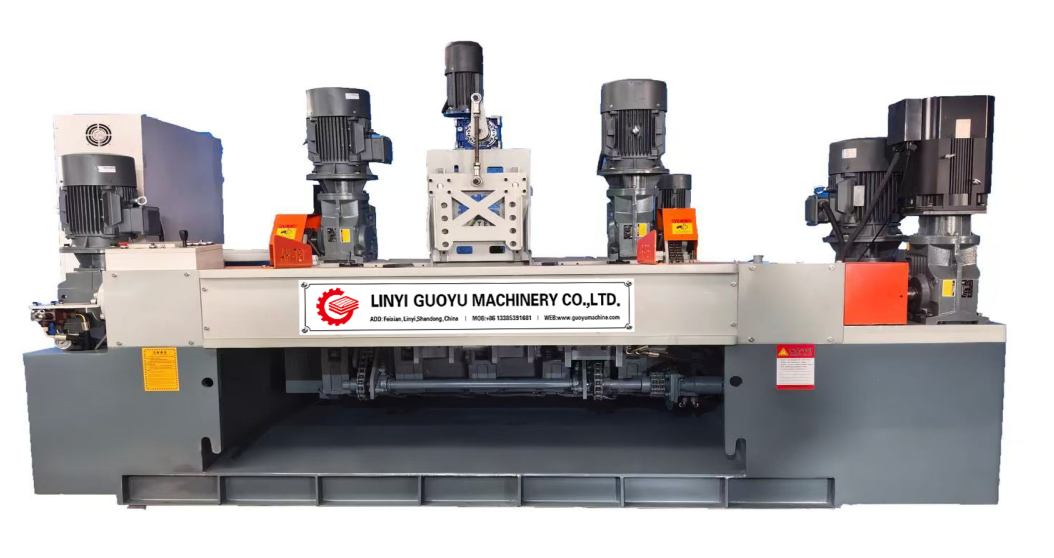
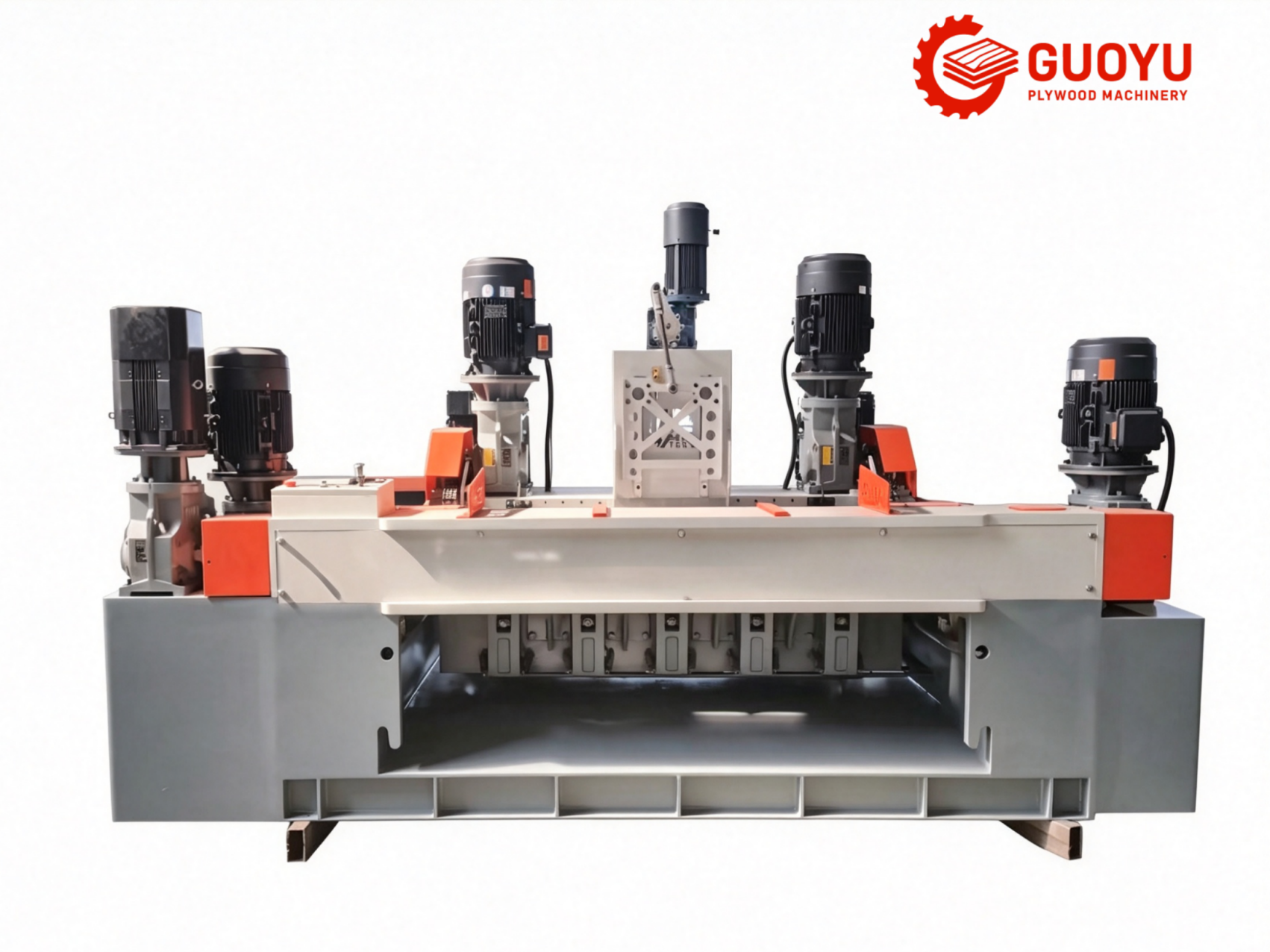
Specifications vary by model and must be matched to your log supply and output target. You can review the full range of veneer peeling equipment here:
Power Supply, Foundation and Site Conditions
- Voltage and frequency. Most of our machines are built for 380 V / 50 Hz. Some export configurations are specified at 415 V / 50 Hz — the 2700 mm wood debarker with crushing system, for example, is listed with 415 V / 50 Hz crushing motors. Power supply and phase differ across Indonesia, Vietnam, Thailand and Malaysia, and sometimes between industrial zones in the same country. Confirm your available supply and request the electrical specification in writing before the order is placed. The full list of available voltage options per model is to be confirmed with our engineering team.
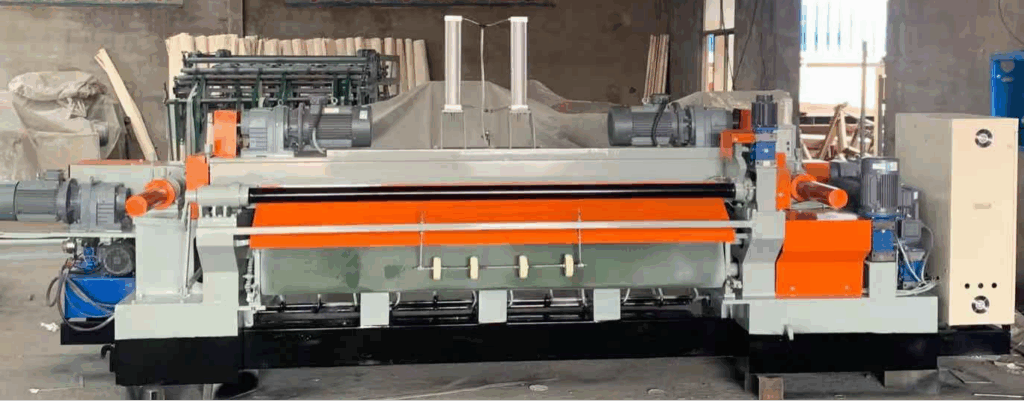
- Footprint and weight. 4 ft spindleless machines typically measure around 4000–4700 mm in length and weigh 6.5–13.5 t. Plan crane access, a level floor and a reinforced foundation, and leave clearance for the receiving rack and maintenance access.
- Tropical operating conditions. High humidity and wood resin attack unprotected surfaces. Oil-immersed slideways and automatic lubrication systems need a defined service interval, and dust extraction should be planned from day one rather than added later.
Installation, Spare Parts and Service in Southeast Asia
- Before shipment. Ask for a factory acceptance test, ideally run under your voltage, with video documentation.
- Installation and commissioning. Our technicians stay on site until the equipment has been running properly for at least one week before leaving.
- Remote support. Our machines are equipped for remote adjustment from our factory, and our engineers provide video guidance for installation, commissioning and maintenance.
- Documentation. PDF user manuals, technical specifications and drawings, firmware notes, and repair and maintenance guides are provided with the machine.
- Warranty. Electrical components are covered for 6 months and hardware parts for 1 year. We quote within 48 hours and respond to after-sales issues within 24 hours.
- Spare parts planning. Order blades, rubber rollers, bearings, belts and fasteners together with the machine. On hardwood duty, knife wear is your main consumable cost, and downtime waiting for a blade costs more than the blade.
- Local coverage. In recent years many Chinese machinery suppliers have set up local agents, after-sales teams and spare parts warehouses in Indonesia, which has shortened response times considerably. Whether a local service point or parts warehouse covers your specific province is to be confirmed with our team.
Часто задаваемые вопросы
Which veneer peeling machine is best for Albasia (Sengon)?
Our softwood model, specified at 0.5–4.0 mm thickness, ±0.1 mm tolerance, 100 m/min and logs from 50–500 mm. The deciding factor is not motor power but speed control and roller pressure: Albasia fibers are loosely packed, so the machine must cut fast enough to slice fibers instead of pulling them.
Can one machine peel both rubberwood and eucalyptus?
Yes. Both are dense hardwoods and both are listed for our heavy-duty hardwood model, which covers 0.8–4.0 mm, 30–120 m/min and a minimum core of 24 mm. If your market requires veneer at ±0.05 mm, the casting CNC model with a cast knife carriage is the better choice.
How small can the leftover log core be?
On our heavy-duty spindleless models, the minimum core is 24–26 mm. The 10 ft face veneer machine leaves 35 mm, and the spindle lathe leaves Φ120 mm. Core diameter directly determines how much of each log becomes sellable veneer, so it belongs in the purchase comparison.
What voltage and frequency should I order?
380 V / 50 Hz is standard, and 415 V / 50 Hz appears on some export configurations. Because the supply varies by country and by site, confirm your voltage and phase first and have the supplier state the electrical specification in writing. Available options for each model are to be confirmed before ordering.
Do you send engineers to Indonesia, Vietnam or Thailand?
Yes. We start with remote diagnosis, and if the issue cannot be resolved remotely we send engineers to the site. Our technicians stay until the equipment has been running properly for at least one week, and operator training is part of the commissioning process.
Next Step: Get a Configuration Matched to Your Logs
Choosing a veneer peeling machine for Southeast Asia comes down to four inputs: wood species, log diameter range, target veneer thickness and daily output target. Send us those four numbers and our engineers will come back with a recommended configuration, a line layout and a quotation, usually within 48 hours.